I've moved, and the new Wonderstuff blog site is up and running over on Wordpress.com. If you are the frequent or occasional visitor to this site, I hope you'll change what needs to be changed which will allow you to shift your wanderings to my new address:
www.wonderstuff.wordpress.com
And, while you're saving new websites, why not add the new blog site created by my wife and I, dedicated to our new appointment as missionaries in Germany? The address:
www.stagesandpages.wordpress.com
We're already blogging away on both, so don't dilly-dally...
Much peace,
Vernon
Monday, April 28, 2008


Tuesday, April 01, 2008
List
I keep encountering lists lately ... and not simply lists of things to do and tasks at hand, but lists of all kinds. Lately, one of my favorite ways to procrastinate at work is to get onto EW.com and click through their ridiculous assortment of pop culture lists (50 Greatest Movie Villains, 20 Scariest Movies, 30 Television Shows You Wish Someone Would Bring Back, etc.). It has taken me a while, but it is strange how many lists sit around my desk. There's a church movie night list, and next to that a two page legal tablet scribbling of the dates of all the Biblical kings and political upheavels, and then there's a post-it with a bunch of names of different Holocaust and World War II historians. Tacked on the bulliten board wall of my desk is a list I compiled in green ink during my last lay-committee meeting with some of the wonderful people at DaySpring Baptist Church in which they imparted to me the kind of things they like to see in a pastor. Not far from this is pinned a list of members of the UBA Student Work Team, and now that I look at it more closely, I see it is from 2006, which means I probably should get an updated version at the next meeting this Thursday...
So, as an ode to all these lists, and because no blog would be complete without a blatant ripoff of another blog, I've decided to compile my own random list, much like the one a friend of mine compiled not long ago on his own blog, which I recently found myself surfing back to in my mid-afternoon boredom.
50 Things...
1) The fingernail on my right index finger cracked over a year ago and still hasn't healed. It's pretty gross.
2) Calvin and Hobbes comic strips constituted around 67% of the comedy I indulged in during my middle school years.
3) I have been yelled at and threatened by a member of Border Patrol.
4) I think I could be friends with Jonathan Papelbon, the Red Sox closer, if given the chance.
5) It often takes me several fluffing cycles before I get around to taking out a load of laundry.
6) I have a black belt in Kung Jung Mu Sul martial arts.
7) I am not a fan of big cities, which makes my current dwelling place a difficult experience.
8) There exists within the American Airlines company a security file on me, and I was once banned from flying with them for six months.
9) In my four and a half years of college, I had four different BSM directors.
10) My oldest friend, who I still keep in touch with, is Lisa (Davis) Snow from 9th grade.
11) I have lived in three different cities in Massachusetts.
12) I was once frisked in front of police officers with hands on holsters, but I have never been arrested.
13) The worst movie I have ever seen is Bill and Ted's Bogus Journey.
14) The greatest beer in the world is Guinness.
15) I am a state champion German Folk Dancer.
16) I once pretended to be stalked by a lunatic to impress a girlfriend.
17) I have never had stitches.
18) I named by boy dog after Huckleberry Finn and my girl dog after the name on the pound's adoption sheet.
19) I am currently reading the Harry Potter series and am ensorcelled by it.
20) I have more than 15 Christian music singing tracks in my possession, and have sung to many of them in public.
21) I learned the difference between the word "cynical" and the word "sardonic" from a stubborn roommate with a dictionary.
22) I have never - NEVER - walked out on a movie in the theater.
23) Three of the best books I have ever read are Gilead, The Brothers K, and The Oath.
24) If I had not met my wife, I would have seriously considered becoming a monk.
25) I had a Michael Jordan/Bugs Bunny poster in my room when I was a teenager. Next to it was a Bartman poster.
26) My sister died while on a Christmas-caroling hayride when I was 8 years old.
27) On my desk stands a troll doll that has been in my possession for over 15 years.
28) My greatest Christmas memory is when I was five and received the entire Voltron robot set. There is a video of my awe-struck reaction.
29) I have never seen the movies Chicago, Casablanca, Pulp Fiction, or It's a Wonderful Life.
30) I am fascinated by The Food Network.
31) I think Field of Dreams, Dead Poet's Society, and The Village are three of the most spiritual films ever made.
32) I loathe going to malls.
33) I once pulled a fire alarm in 8th grade.
34) I've ordered black pudding in Ireland thinking I was getting chocolate Jell-O.
35) My first kiss was on a school bus in that little seat in the rear.
36) The best piece of fruit is a pear.
37) My guilty pleasure is watching South Park and laughing hysterically.
38) Three movies I could watch over and over again are: Anchorman, Wonder Boys, and The Insider.
39) I've had Shingles.
40) I've sipped coffee and people-watched outside a cafe in Paris.
41) I was a member of a state champion Polka Band.
42) I have been a two-time award winner in the category of "Dance."
43) My first kiss with my wife was on the Brooklyn Bridge.
43) I think, in a few years, the term "theology" will be considered a subversive term in some denominations.
44) My two most outlandish goals are to hike the Appalachian Trail in its entirety, and win the Pulitzer Prize for Fiction.
45) My best friend, Stevie, is a pharmacist, and I feel guilty when I call him for medicine advice.
46) I can't remember the last time I vomited.
47) My mother has out-read me in books by at least 10-1, and this is just in the last five years.
48) I get extremely self-conscious when I try to dance with someone.
49) I have to go to the bathroom.
50) I hate iceburg lettuce.
So, as an ode to all these lists, and because no blog would be complete without a blatant ripoff of another blog, I've decided to compile my own random list, much like the one a friend of mine compiled not long ago on his own blog, which I recently found myself surfing back to in my mid-afternoon boredom.
50 Things...
1) The fingernail on my right index finger cracked over a year ago and still hasn't healed. It's pretty gross.
2) Calvin and Hobbes comic strips constituted around 67% of the comedy I indulged in during my middle school years.
3) I have been yelled at and threatened by a member of Border Patrol.
4) I think I could be friends with Jonathan Papelbon, the Red Sox closer, if given the chance.
5) It often takes me several fluffing cycles before I get around to taking out a load of laundry.
6) I have a black belt in Kung Jung Mu Sul martial arts.
7) I am not a fan of big cities, which makes my current dwelling place a difficult experience.
8) There exists within the American Airlines company a security file on me, and I was once banned from flying with them for six months.
9) In my four and a half years of college, I had four different BSM directors.
10) My oldest friend, who I still keep in touch with, is Lisa (Davis) Snow from 9th grade.
11) I have lived in three different cities in Massachusetts.
12) I was once frisked in front of police officers with hands on holsters, but I have never been arrested.
13) The worst movie I have ever seen is Bill and Ted's Bogus Journey.
14) The greatest beer in the world is Guinness.
15) I am a state champion German Folk Dancer.
16) I once pretended to be stalked by a lunatic to impress a girlfriend.
17) I have never had stitches.
18) I named by boy dog after Huckleberry Finn and my girl dog after the name on the pound's adoption sheet.
19) I am currently reading the Harry Potter series and am ensorcelled by it.
20) I have more than 15 Christian music singing tracks in my possession, and have sung to many of them in public.
21) I learned the difference between the word "cynical" and the word "sardonic" from a stubborn roommate with a dictionary.
22) I have never - NEVER - walked out on a movie in the theater.
23) Three of the best books I have ever read are Gilead, The Brothers K, and The Oath.
24) If I had not met my wife, I would have seriously considered becoming a monk.
25) I had a Michael Jordan/Bugs Bunny poster in my room when I was a teenager. Next to it was a Bartman poster.
26) My sister died while on a Christmas-caroling hayride when I was 8 years old.
27) On my desk stands a troll doll that has been in my possession for over 15 years.
28) My greatest Christmas memory is when I was five and received the entire Voltron robot set. There is a video of my awe-struck reaction.
29) I have never seen the movies Chicago, Casablanca, Pulp Fiction, or It's a Wonderful Life.
30) I am fascinated by The Food Network.
31) I think Field of Dreams, Dead Poet's Society, and The Village are three of the most spiritual films ever made.
32) I loathe going to malls.
33) I once pulled a fire alarm in 8th grade.
34) I've ordered black pudding in Ireland thinking I was getting chocolate Jell-O.
35) My first kiss was on a school bus in that little seat in the rear.
36) The best piece of fruit is a pear.
37) My guilty pleasure is watching South Park and laughing hysterically.
38) Three movies I could watch over and over again are: Anchorman, Wonder Boys, and The Insider.
39) I've had Shingles.
40) I've sipped coffee and people-watched outside a cafe in Paris.
41) I was a member of a state champion Polka Band.
42) I have been a two-time award winner in the category of "Dance."
43) My first kiss with my wife was on the Brooklyn Bridge.
43) I think, in a few years, the term "theology" will be considered a subversive term in some denominations.
44) My two most outlandish goals are to hike the Appalachian Trail in its entirety, and win the Pulitzer Prize for Fiction.
45) My best friend, Stevie, is a pharmacist, and I feel guilty when I call him for medicine advice.
46) I can't remember the last time I vomited.
47) My mother has out-read me in books by at least 10-1, and this is just in the last five years.
48) I get extremely self-conscious when I try to dance with someone.
49) I have to go to the bathroom.
50) I hate iceburg lettuce.
Tuesday, February 19, 2008
Good Words I Didn't Write
My intention for this blog is to remind myself and its readers of the wonder of God, and the issues that might determine our awareness of God's will in our lives and the lives of others. Therefore, many of the things I write, I hope, are understood to be the musings of a man who is turning truth over and over in his hands, inspecting it, pondering it, trying to get a better feel for it. If some of my posts persuade, I hope that they do so with all gentleness.
Yet it is not my intention to persuade you so much with this post, but rather to remind you of the importance of a spiritual awareness, and how this can affect our present lives as well as the country in which we live. You may have your mind made up on who to vote for in the upcoming presidential elections, and it is not my desire to debate the merit of your choice. Mine is merely a desire to challenge - to remember, if you are a person of faith, what is important in such a time as this. After much personal consideration, below is both the candidate I am currently resolved to vote for, as well as the speech that persuaded me. I encourage you to watch it, not that you might be drawn into a specific political camp, but rather to be reminded of the role of faith and religion in this country. It is about 40 minutes long, but I do hope you will view it, even if you have to return to it a couple of times to hear it all. Even if you are already not interested in this candidate, please know that there is no mention of the current campaign, but only the issue of faith and politics. Whoever you choose to vote for, this speech is definitely worth hearing.
Yet it is not my intention to persuade you so much with this post, but rather to remind you of the importance of a spiritual awareness, and how this can affect our present lives as well as the country in which we live. You may have your mind made up on who to vote for in the upcoming presidential elections, and it is not my desire to debate the merit of your choice. Mine is merely a desire to challenge - to remember, if you are a person of faith, what is important in such a time as this. After much personal consideration, below is both the candidate I am currently resolved to vote for, as well as the speech that persuaded me. I encourage you to watch it, not that you might be drawn into a specific political camp, but rather to be reminded of the role of faith and religion in this country. It is about 40 minutes long, but I do hope you will view it, even if you have to return to it a couple of times to hear it all. Even if you are already not interested in this candidate, please know that there is no mention of the current campaign, but only the issue of faith and politics. Whoever you choose to vote for, this speech is definitely worth hearing.
Wednesday, February 06, 2008
The Maker of Dust
In celebration of Ash Wednesday...
In the quiet dark of the chapel, he reaches to unfold the kneeler and his tired legs bend, weary bones popping. His elbows find the back of the pew. His worn, wrinkled hands clasp. His crumpled frame genuflects in prayer. Were he able to pick himself up from such a position, he would have chosen to prostrate himself, right there in the aisle - to melt away into the thin, dusty carpet, become nothing more than that. And this is what he prays as he kneels. That he is dust, and to dust he shall return.
His hands hold a tremor, and his shoulders shiver from the awkward position while his parched lips speak in silence, confessions of sins long forgotten by all but him and the One to which he prays. Pleading in penitence. Vowing repentance, then stilling his soundless words when he remembers not to be hasty before God with a vow. So, slowly, in few words, he changes his vow to a desperate hope. This, after all, is the nature of his prayers.
There is a depth to the little room that he has not noticed before. A spaciousness in it that the quiet has brought out. He feels small. There in the chapel, he feels he is shrinking. Eroding. Dissipating dust. Let me retain only that which is essential, he prays. Only that which is pure and vital ... and if there is nothing, let me cease to be. Let me disintegrate to dust, and let me be captured up in you.
Not even dust escapes through Your fingers. He is comforted by this thought, and a thin smile, hardly noticeable behind the penitent grimace, curves his mouth. He looks down at his clasped hands, sees the dirt and grime of the world upon them, the blood and the death. He sees these things there behind the skin, where soap and water does not reach. He sees them there, corruption soaked into dust, and squeezing his eyes tighter, he prays all the more.
He hears the minister speak, but does not move. The voice echoes in the room that has grown so large. Still, he wonders if it is large enough to hold his sins. Yet even as the quiet wraps around him, shrinking him into nothing, the words find his hungry ears. "In returning and rest you shall be saved. In quietness and confidence shall be your strength."
And it happens that he realizes the cavern-like chapel, gaping larger than he has ever known it, is not to serve as a storehouse for sin, but a palace of peace. The yawning space around him is not empty, but has stretched and grown to accommodate something much grander. He opens his eyes again to view his hands, and there, perched before him, elbows on the pew, they suddenly appear clean, even beneath the skin.
He understands now that he is not shrinking, not dissipating away, but changing, becoming something new, something still composed of dust, but possessing a wind-like strength that comforts his weary knees and stills his trembling hands. He now feels a spaciousness within, filled with a billowing, peaceful whisper, words he cannot fully recognize, but residing inside, repeating encouragement he will carry with him like a blanket. And the largeness of the room, like a gaping mouth, is most certainly filled with something like a breath, gentle and sweet, capturing him, the minister, and all other mendicants up in a rest that floods over them like true love in the heart.
Again, he prays that he is dust, and to dust he shall return. Yet he takes joy in this, for within the quiet about him, and the whisper within, he feels the presence of the Maker of dust.
In the quiet dark of the chapel, he reaches to unfold the kneeler and his tired legs bend, weary bones popping. His elbows find the back of the pew. His worn, wrinkled hands clasp. His crumpled frame genuflects in prayer. Were he able to pick himself up from such a position, he would have chosen to prostrate himself, right there in the aisle - to melt away into the thin, dusty carpet, become nothing more than that. And this is what he prays as he kneels. That he is dust, and to dust he shall return.
His hands hold a tremor, and his shoulders shiver from the awkward position while his parched lips speak in silence, confessions of sins long forgotten by all but him and the One to which he prays. Pleading in penitence. Vowing repentance, then stilling his soundless words when he remembers not to be hasty before God with a vow. So, slowly, in few words, he changes his vow to a desperate hope. This, after all, is the nature of his prayers.
There is a depth to the little room that he has not noticed before. A spaciousness in it that the quiet has brought out. He feels small. There in the chapel, he feels he is shrinking. Eroding. Dissipating dust. Let me retain only that which is essential, he prays. Only that which is pure and vital ... and if there is nothing, let me cease to be. Let me disintegrate to dust, and let me be captured up in you.
Not even dust escapes through Your fingers. He is comforted by this thought, and a thin smile, hardly noticeable behind the penitent grimace, curves his mouth. He looks down at his clasped hands, sees the dirt and grime of the world upon them, the blood and the death. He sees these things there behind the skin, where soap and water does not reach. He sees them there, corruption soaked into dust, and squeezing his eyes tighter, he prays all the more.
He hears the minister speak, but does not move. The voice echoes in the room that has grown so large. Still, he wonders if it is large enough to hold his sins. Yet even as the quiet wraps around him, shrinking him into nothing, the words find his hungry ears. "In returning and rest you shall be saved. In quietness and confidence shall be your strength."
And it happens that he realizes the cavern-like chapel, gaping larger than he has ever known it, is not to serve as a storehouse for sin, but a palace of peace. The yawning space around him is not empty, but has stretched and grown to accommodate something much grander. He opens his eyes again to view his hands, and there, perched before him, elbows on the pew, they suddenly appear clean, even beneath the skin.
He understands now that he is not shrinking, not dissipating away, but changing, becoming something new, something still composed of dust, but possessing a wind-like strength that comforts his weary knees and stills his trembling hands. He now feels a spaciousness within, filled with a billowing, peaceful whisper, words he cannot fully recognize, but residing inside, repeating encouragement he will carry with him like a blanket. And the largeness of the room, like a gaping mouth, is most certainly filled with something like a breath, gentle and sweet, capturing him, the minister, and all other mendicants up in a rest that floods over them like true love in the heart.
Again, he prays that he is dust, and to dust he shall return. Yet he takes joy in this, for within the quiet about him, and the whisper within, he feels the presence of the Maker of dust.
Thursday, January 31, 2008
January Notes
I have been internally debating returning to this blog for about a month now. It isn't that I don't like posting my thoughts. It isn't because my readership is minimal (I write for myself before I write for anyone else). It isn't even because I don't normally have the time handy that it takes to sit down, brood, and write. That is a continual problem, but one that can be overcome with a little bit of planning and awareness. The reasons for avoiding this blog are actually beyond me. Sometimes it feels like a child's toy that's been played with until the thought of picking it up again and entering that wonderful, imaginary world, for some reason, doesn't possess the same compelling feeling. Or like a movie you know you love no matter how many times you have viewed it, and yet, even on your greatest day of boredom, you can't bring yourself to pop it in the player again.
I suppose healing to such avoidance-behavior can only be found by picking that ol' action figure up again, popping that dusty videotape back into the VCR, and forgetting about yourself long enough to allow something to bless you, even if you believe it is a foregone possibility. Hence this, my first post in several months, which finds the structure in the telling of a couple of good experiences had over the past month.
Rejuvenation
I began my year by attending a week-long retreat in Kerrville, sponsored by the Truett Seminary Center for Effective Preaching. Technically an "I-term" seminary class, I was glad to find that I was not the only graduate in the group. I reunited with several friends from my days at DaySpring in Waco, and we joined with several current students for what was entitled "Imaginative Reading for Creative Preaching."
The week was a true blessing. As 2007 drew to an end, I felt like I was running on fumes, as rickety and unsure upon the journey as my old, rapidly-deteriorating Jeep (which, thankfully, carried me to Kerrville and back safely nonetheless). But this retreat/class was like pulling up to the pumps and topping off the tank. I was rejuvenated in both my reading and my writing, so much so that even during the free afternoons, while the current students were cramming and reviewing their notes (ah, the joy of not having to worry about grades anymore), I sat out on the spacious backside of our cabin, softly rocking back and forth in an old, wooden porch chair, and tapped away on my novel, feeling as if something had been restarted within me. I was the Energizer Bunny who had finally - finally - run out of juice, only to be saddled with a brand new charge. I left the retreat with a sad heart, having been reminded how wonderful seeking deep, challenging truth in community could be. It was a long, quiet, reflective drive back to Houston.
Healing
The other piece of devotion that was kick-started, both by the retreat as well as simply by the obligatory resolutions that come with the start of a new year, was a return to a time of contemplation, quietness, and prayer. Not only have Leigh and I begun to meet together one morning a week to pray both for our future - on the mission field - and the current issues filling our lives, but I have taken back up with renewed fervor the keeping of the daily office. The Book of Common Prayer has become even more invaluable to me than it was when I first purchased it our of sheer curiosity a few years ago. I am currently attempting to keep the 9:00, noon, and 5:00 hours of prayer, and I have found that the more I fashion this time as a mini-retreat, the greater sense of importance it inhabits within me. At the office or at home, I shut all the window blinds, clear my desk, light candles, and read the selected psalms, readings, and collects out loud. I've even been incorporating some different styles of chant. So, I guess I'm still perpetuating my wannabe Catholic-ness. Then again, it would be more accurate to call it a wannabe Episcopalian-ness.
The best apart about all of this, is that I have not returned to these things (writing, meditation, prayer) out of guilt, but out of a real desire to revisit the intimate, mysterious connection these things afforded me with God. Growing up, I was always guilted into "quiet times" and Scripture memorization ... and then guilted all the more when I "backslid" from such things. It has surprised me how a prolonged separation of genuine seeking and centering can cause a person to make the effort all by him - or her - self. I guess we're never completely lost, no matter who may tell us so. After all, the writer of Hebrews reminds us that, "when we are faithless, he will remain faithful, for he cannot deny himself." It is this saving reality that produces hope when it seems all hope is lost. No matter how far I fall, no matter how rebellious my actions, no matter how impure my thoughts, no matter how destructive my words - there is one I cannot shake from my shoulders no matter how violently I may writhe for freedom.
Jacob wrestled with the angel, but even in his strength and persistence, he did not walk away a winner. He did, however, walk away a new man with a new name.
I suppose there are more bold, italicized topics I could include in here. I could write more about the progression of the novel, about the wonderful books I have been reading, the contemplative prayer service I am going to be leading every week of Lent, or my plans for Ash Wednesday (which includes catching an evening concert by the rarely-outside-of-Ohio duo, Over the Rhine). I could talk about my scary addiction to FIFA Soccer on Xbox, or the new car my wife bought me for Christmas that finally arrived a week ago.
I could talk about a lot of things, but none would be more wonderful and wonder-filled to me than the two mentioned. I am rejuvenated, even in the face of a new calendar year and a lot of new responsibilities. And I am healed, even while the lingering smell of running on fumes still returns to my nose from time to time. But it's a continuous thing, these blessings, and win or lose, no one ever said wrestling was easy.
I suppose healing to such avoidance-behavior can only be found by picking that ol' action figure up again, popping that dusty videotape back into the VCR, and forgetting about yourself long enough to allow something to bless you, even if you believe it is a foregone possibility. Hence this, my first post in several months, which finds the structure in the telling of a couple of good experiences had over the past month.
Rejuvenation
I began my year by attending a week-long retreat in Kerrville, sponsored by the Truett Seminary Center for Effective Preaching. Technically an "I-term" seminary class, I was glad to find that I was not the only graduate in the group. I reunited with several friends from my days at DaySpring in Waco, and we joined with several current students for what was entitled "Imaginative Reading for Creative Preaching."
The week was a true blessing. As 2007 drew to an end, I felt like I was running on fumes, as rickety and unsure upon the journey as my old, rapidly-deteriorating Jeep (which, thankfully, carried me to Kerrville and back safely nonetheless). But this retreat/class was like pulling up to the pumps and topping off the tank. I was rejuvenated in both my reading and my writing, so much so that even during the free afternoons, while the current students were cramming and reviewing their notes (ah, the joy of not having to worry about grades anymore), I sat out on the spacious backside of our cabin, softly rocking back and forth in an old, wooden porch chair, and tapped away on my novel, feeling as if something had been restarted within me. I was the Energizer Bunny who had finally - finally - run out of juice, only to be saddled with a brand new charge. I left the retreat with a sad heart, having been reminded how wonderful seeking deep, challenging truth in community could be. It was a long, quiet, reflective drive back to Houston.
Healing
The other piece of devotion that was kick-started, both by the retreat as well as simply by the obligatory resolutions that come with the start of a new year, was a return to a time of contemplation, quietness, and prayer. Not only have Leigh and I begun to meet together one morning a week to pray both for our future - on the mission field - and the current issues filling our lives, but I have taken back up with renewed fervor the keeping of the daily office. The Book of Common Prayer has become even more invaluable to me than it was when I first purchased it our of sheer curiosity a few years ago. I am currently attempting to keep the 9:00, noon, and 5:00 hours of prayer, and I have found that the more I fashion this time as a mini-retreat, the greater sense of importance it inhabits within me. At the office or at home, I shut all the window blinds, clear my desk, light candles, and read the selected psalms, readings, and collects out loud. I've even been incorporating some different styles of chant. So, I guess I'm still perpetuating my wannabe Catholic-ness. Then again, it would be more accurate to call it a wannabe Episcopalian-ness.
The best apart about all of this, is that I have not returned to these things (writing, meditation, prayer) out of guilt, but out of a real desire to revisit the intimate, mysterious connection these things afforded me with God. Growing up, I was always guilted into "quiet times" and Scripture memorization ... and then guilted all the more when I "backslid" from such things. It has surprised me how a prolonged separation of genuine seeking and centering can cause a person to make the effort all by him - or her - self. I guess we're never completely lost, no matter who may tell us so. After all, the writer of Hebrews reminds us that, "when we are faithless, he will remain faithful, for he cannot deny himself." It is this saving reality that produces hope when it seems all hope is lost. No matter how far I fall, no matter how rebellious my actions, no matter how impure my thoughts, no matter how destructive my words - there is one I cannot shake from my shoulders no matter how violently I may writhe for freedom.
Jacob wrestled with the angel, but even in his strength and persistence, he did not walk away a winner. He did, however, walk away a new man with a new name.
I suppose there are more bold, italicized topics I could include in here. I could write more about the progression of the novel, about the wonderful books I have been reading, the contemplative prayer service I am going to be leading every week of Lent, or my plans for Ash Wednesday (which includes catching an evening concert by the rarely-outside-of-Ohio duo, Over the Rhine). I could talk about my scary addiction to FIFA Soccer on Xbox, or the new car my wife bought me for Christmas that finally arrived a week ago.
I could talk about a lot of things, but none would be more wonderful and wonder-filled to me than the two mentioned. I am rejuvenated, even in the face of a new calendar year and a lot of new responsibilities. And I am healed, even while the lingering smell of running on fumes still returns to my nose from time to time. But it's a continuous thing, these blessings, and win or lose, no one ever said wrestling was easy.
Wednesday, October 31, 2007
Rock On! - A Concert-Going Memoir
Despite the fact that it has been awhile since I have posted anything, and the fact that right now I have a hundred different thoughts all doing a rain dance inside my head, I want to go in a different direct on this post. Besides, most of my thoughts right now are so muddled and jumbled and un-fleshed out that to spill them onto the blog would just be one big, wonderful mess. We'll save that for later...
Last weekend, I attended the Appetite for Construction Concert Tour, which featured Switchfoot and Relient K. All in all, I had a very good time, even if I had purchased 12 tickets in plans of taking a group of youth only to find myself there with my wife, sister-in-law, and her friend, and no youth. But it got me thinking: What are the best concerts I have ever attended? ... and What have been the worst? Join me as we take a stroll down Vernon's Memory Lane...


A very good, very laid-back, stripped-down concert in the basement of a church in Dallas, TX. I was only newly introduced to Pierce by my friend, Josh (who, you'll find, is an influence in a few of these selections), and I was not disappointed by Pierce's deep, soulful folk voice that blends so finely with his stark yet beautiful guitar playing. Eric Peters opened, and did a great job by himself as well, even when his guitar string snapped halfway through one of his best songs - he took about five minutes to change and tune it, then returned to the song as if he had never stopped. I got a chance to talk to Pierce for a moment during the intermission in which he told me a great story about how he came to write one of his songs. And it was his playing of "Song of Songs" that has stayed with me so long, and why I sang it to Leigh at our wedding reception.
#4 - Behold the Lamb of God with Andrew Peterson & guests

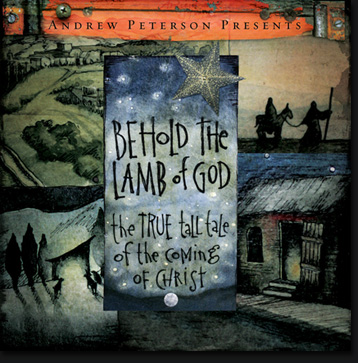
Saw this one in Clear Lake, TX with my buddy, Grayson. An amazing concert. You'll notice that I like a lot of folk music, and like it even better in concert when it is laid-back and showcases just an artist and his or her guitar. The first half was just Peterson and his friends (Sandra McCracken, Derek Webb, Jill Phillips, Andy Gullahorn, Andrew Osenga, and Randall Goodgame) all playing a couple of their own songs. After intermission, they all came back out and collaborated, playing through Peterson's entire Christmas concert. Phenomenal talent and beautiful music, and even though Jill and Sandra are married (as well as me, I might add), all rolled up, this was one of the few concerts I felt privileged to be at, like I was in on a secret.
***I got my tickets for this year's show in Sugarland - Nov. 30th - the evening of my birthday -
along with a few extras, in case anyone is interested.***
#3 - dc Talk w/ Christafari and Grits


Not that I could forget the (then very new) group, Grits', audience-participation "Let Me See Your Head Bob" song, or the strange woman who came out of nowhere and started dancing some African/islander-inspired dance during Christafari's reggae-rock, but the most memorable thing about #3 is the energy and craziness incited by dc Talk's set. This concert was pre-Jesus Freak album, post-Jesus Freak single, so their image was still transforming from goofy rap hooks to a melding of grunge and alternative pop ... I don't know if this was the recipe for awesome, but it sure did the trick. For the first time in my life, I moshed, crowd-surfed, pushed and shoved my way to the front of the stage, and left with my entire T-shirt soaked through with sweat. Now, some of you might chuckle at the lameness of said moshing, crowd-surfing, and such that might have been at a dc Talk concert, but you must remember that I was an innocent sixteen year old kid in a youth group, and the sweat-soaked shirt was one of those ridiculous Christian tees (the only one I miss wearing, I might add). But, c'mon, when Toby climbed up the twelve foot speaker, pointed at us, and then jumped off, how could this gig not make the list?
#2 - David Wilcox

What can I say about this one? It's not like me to become a huge fan of an artist just by going to hear him play live. Normally, I'm more of a studio album fan - I've been bored at many a concert because the music just doesn't sound as good live as it does on the album, or it doesn't move me the way the album version does. Certainly not the case with Wilcox. I've seen him three times in the same place (McDavid Studio in Ft. Worth, TX), one year after the other. It was the first song (and subsequent story) that sold me on every ticket and album I later purchased. I still remember the little girl in the front with her parents who, after she requested one of his hit songs right at the beginning, received his answer, "What? Okay, sure. I was gonna save that one for the end, but you might be asleep." At the end of the show, before he could walk out, she ran up and gave a him a big hug. And why wouldn't she? Wilcox is an amazing guitar player and songwriter, but it is his stories that keep you coming back to his concerts. In explaining a metaphor around which he crafts a song, Wilcox will go into wonderful and whimsical detail before playing many of them, all while strumming and tuning. His metaphor on theodicy using golf was extraordinary. Once again, I must give props to my friend, Josh, for inviting me to that first concert and turning me on to this amazing artist. The concert atmosphere is best captured on Wilcox's two live albums, East Asheville Hardware and Live Songs and Stories, and, I promise, unless you despise folk music in its entirety, you'll never feel more alive than when you listen and laugh at his work. If you do hate folk music, I'm pretty sure that is proof you are already dead anyway.
#1 - Rick Elias Remembers Rich Mullins


The Celebrate Freedom concert at Southfork Ranch in Dallas, TX, back in the summer of 1998, shows up several more times on this list, but mostly in the "bad" section. However, there was one shining moment that redeemed the whole experience for me that hot-rainy-hot-rainy July day. Several artists passing through Dallas who were not on the bill showed up at Southfork that afternoon. One was Ragamuffin Band member, Rick Elias. Despite continual warnings all afternoon about lightning, and a sky that was threatening, and soon unleashed, a downpour of rain during his brief set, Rick Elias squeezed into the schedule and stepped out onto the stage. He plugged in his acoustic guitar and said, "As many of you are aware, my friend Rich tragically passed away last September. This was a song he really liked." He proceeded to play "Man of No Reputation," a song, it has been told, Rich wanted to record on the album he was working on at the time of his death, but had not yet been able to get through his cover of it without breaking down crying. It seemed Rick was almost as choked up when he transitioned into his only other song, "My Deliverer," which was out on the radio at that time. As he played and we all began to sing along, the rain began to pour from the gray-green sky, and as stagehands began motioning for him to pack it up because of lightning, Rick stopped singing after repeating the last refrain, stood listening to us continue on for a few moments, and then quietly unplugged his guitar and walked off stage. Never has a concert experience equaled the power of those two, simple songs.
Honorable Mentions
Switchfoot / Relient K - Houston, TX (last weekend)

Third Day Worship Concert - Worcester, MA

Burlap to Cashmere - Celebrate Freedom 1998 (while still unknown)

Reba McEntire - Austin, TX 1996

Funky Brass Factory - Austin, TX - Halloween Concert @ The Oasis 2001

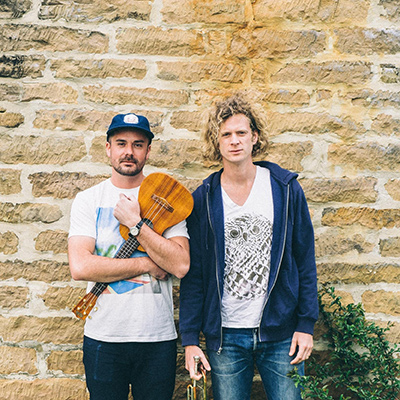
That's my buddy, Michael, in the non-black shirt. Check out his music at www.myspace.com/justmike88
Last weekend, I attended the Appetite for Construction Concert Tour, which featured Switchfoot and Relient K. All in all, I had a very good time, even if I had purchased 12 tickets in plans of taking a group of youth only to find myself there with my wife, sister-in-law, and her friend, and no youth. But it got me thinking: What are the best concerts I have ever attended? ... and What have been the worst? Join me as we take a stroll down Vernon's Memory Lane...
The Best
#5 - Pierce Pettis (Eric Peters)
A very good, very laid-back, stripped-down concert in the basement of a church in Dallas, TX. I was only newly introduced to Pierce by my friend, Josh (who, you'll find, is an influence in a few of these selections), and I was not disappointed by Pierce's deep, soulful folk voice that blends so finely with his stark yet beautiful guitar playing. Eric Peters opened, and did a great job by himself as well, even when his guitar string snapped halfway through one of his best songs - he took about five minutes to change and tune it, then returned to the song as if he had never stopped. I got a chance to talk to Pierce for a moment during the intermission in which he told me a great story about how he came to write one of his songs. And it was his playing of "Song of Songs" that has stayed with me so long, and why I sang it to Leigh at our wedding reception.
#4 - Behold the Lamb of God with Andrew Peterson & guests
Saw this one in Clear Lake, TX with my buddy, Grayson. An amazing concert. You'll notice that I like a lot of folk music, and like it even better in concert when it is laid-back and showcases just an artist and his or her guitar. The first half was just Peterson and his friends (Sandra McCracken, Derek Webb, Jill Phillips, Andy Gullahorn, Andrew Osenga, and Randall Goodgame) all playing a couple of their own songs. After intermission, they all came back out and collaborated, playing through Peterson's entire Christmas concert. Phenomenal talent and beautiful music, and even though Jill and Sandra are married (as well as me, I might add), all rolled up, this was one of the few concerts I felt privileged to be at, like I was in on a secret.
***I got my tickets for this year's show in Sugarland - Nov. 30th - the evening of my birthday -
along with a few extras, in case anyone is interested.***
#3 - dc Talk w/ Christafari and Grits
Not that I could forget the (then very new) group, Grits', audience-participation "Let Me See Your Head Bob" song, or the strange woman who came out of nowhere and started dancing some African/islander-inspired dance during Christafari's reggae-rock, but the most memorable thing about #3 is the energy and craziness incited by dc Talk's set. This concert was pre-Jesus Freak album, post-Jesus Freak single, so their image was still transforming from goofy rap hooks to a melding of grunge and alternative pop ... I don't know if this was the recipe for awesome, but it sure did the trick. For the first time in my life, I moshed, crowd-surfed, pushed and shoved my way to the front of the stage, and left with my entire T-shirt soaked through with sweat. Now, some of you might chuckle at the lameness of said moshing, crowd-surfing, and such that might have been at a dc Talk concert, but you must remember that I was an innocent sixteen year old kid in a youth group, and the sweat-soaked shirt was one of those ridiculous Christian tees (the only one I miss wearing, I might add). But, c'mon, when Toby climbed up the twelve foot speaker, pointed at us, and then jumped off, how could this gig not make the list?
#2 - David Wilcox
What can I say about this one? It's not like me to become a huge fan of an artist just by going to hear him play live. Normally, I'm more of a studio album fan - I've been bored at many a concert because the music just doesn't sound as good live as it does on the album, or it doesn't move me the way the album version does. Certainly not the case with Wilcox. I've seen him three times in the same place (McDavid Studio in Ft. Worth, TX), one year after the other. It was the first song (and subsequent story) that sold me on every ticket and album I later purchased. I still remember the little girl in the front with her parents who, after she requested one of his hit songs right at the beginning, received his answer, "What? Okay, sure. I was gonna save that one for the end, but you might be asleep." At the end of the show, before he could walk out, she ran up and gave a him a big hug. And why wouldn't she? Wilcox is an amazing guitar player and songwriter, but it is his stories that keep you coming back to his concerts. In explaining a metaphor around which he crafts a song, Wilcox will go into wonderful and whimsical detail before playing many of them, all while strumming and tuning. His metaphor on theodicy using golf was extraordinary. Once again, I must give props to my friend, Josh, for inviting me to that first concert and turning me on to this amazing artist. The concert atmosphere is best captured on Wilcox's two live albums, East Asheville Hardware and Live Songs and Stories, and, I promise, unless you despise folk music in its entirety, you'll never feel more alive than when you listen and laugh at his work. If you do hate folk music, I'm pretty sure that is proof you are already dead anyway.
#1 - Rick Elias Remembers Rich Mullins
The Celebrate Freedom concert at Southfork Ranch in Dallas, TX, back in the summer of 1998, shows up several more times on this list, but mostly in the "bad" section. However, there was one shining moment that redeemed the whole experience for me that hot-rainy-hot-rainy July day. Several artists passing through Dallas who were not on the bill showed up at Southfork that afternoon. One was Ragamuffin Band member, Rick Elias. Despite continual warnings all afternoon about lightning, and a sky that was threatening, and soon unleashed, a downpour of rain during his brief set, Rick Elias squeezed into the schedule and stepped out onto the stage. He plugged in his acoustic guitar and said, "As many of you are aware, my friend Rich tragically passed away last September. This was a song he really liked." He proceeded to play "Man of No Reputation," a song, it has been told, Rich wanted to record on the album he was working on at the time of his death, but had not yet been able to get through his cover of it without breaking down crying. It seemed Rick was almost as choked up when he transitioned into his only other song, "My Deliverer," which was out on the radio at that time. As he played and we all began to sing along, the rain began to pour from the gray-green sky, and as stagehands began motioning for him to pack it up because of lightning, Rick stopped singing after repeating the last refrain, stood listening to us continue on for a few moments, and then quietly unplugged his guitar and walked off stage. Never has a concert experience equaled the power of those two, simple songs.
Honorable Mentions
Switchfoot / Relient K - Houston, TX (last weekend)
Third Day Worship Concert - Worcester, MA
Burlap to Cashmere - Celebrate Freedom 1998 (while still unknown)
Reba McEntire - Austin, TX 1996
Funky Brass Factory - Austin, TX - Halloween Concert @ The Oasis 2001
That's my buddy, Michael, in the non-black shirt. Check out his music at www.myspace.com/justmike88
That's all for this post. Check back soon for part two, in which I list the five worst concerts I have ever been to, as well as the three artists/bands I must see before I die.
In the meantime, what are your top five concerts? Comment and let me know ... I'm always looking for a good show.
In the meantime, what are your top five concerts? Comment and let me know ... I'm always looking for a good show.
Sunday, September 30, 2007
A Life Preserver Better Thrown
For Kelsey
If life is a story and faith is a journey, like I tell the students in my church, then there are moments of tragedy and speedbumps in the road that greatly affect our lives and our faith. Most of these times come without much, if any, warning. Others can be plainly seen crouching in wait on the far horizon, practically inevitable, either because of our progressing situations or simply our stubbornness against changing course. All these times can be our teachers. I believe they can lead us into a deeper understanding of who we are, at our core. They can shed more light on the face of our soul.
Right now, a beautiful song by the great poet, Rich Mullins, has begun to play on my iTunes. "Hold Me Jesus." In this song, which I have listened to at least a hundred times, the chorus whispers, "Hold me, Jesus, because I'm shaking like a leaf. You have been King of my glory - won't you be my Prince of peace?" And in a world where so many of us see and condemn this "my...my...my" cultural Christianity, I'm struck tonight by Mullins' aching request. Glory can seem an elusive thing, but all in all, I believe it's pretty easy to come by. But peace...
Peace is tougher.
My glory. My peace. There's no selfishness in this song. Only need. There's no rejection of God's sovereignty or worth. Only the recognition that, now, in this moment, in the midst of this time of pain, there is a desperate desire for my identity to be wrapped up in the One who bestows both glory and peace, strength and hope.
Perhaps one of the most overused little verses of Scripture is the twenty-eighth verse of Romans, chapter eight. "We know that all things work together for good for those who love God, who are called according to his purpose." Most of the time this verse is butchered, not in misquoting, but in blind-to-the-situation spewing. It is normally handed out by a person who has not truly attempted to identify with another's pain, and is instead throwing this verse at it like a tiny life preserver into a churning sea. Whether or not they believe the truth in this verse, they really haven't stopped to consider the connection between the truth and the pain.
Growing up, when I experienced the breakup of a relationship, I heard this truth quoted plenty... and despite good intentions, I was extremely irritated by people who tried to comfort me by telling me that everyone goes through these kind of things. In other words, my pain is nothing unique, so... I shouldn't be so upset? I should stop moping around? I should get over it because it's embarrassing otherwise? I was never quite sure why anyone would try to make common my pain - how does that help? I suppose some were merely trying to identify with me, and to be sure, it can be quite difficult to bestow comfort if we feel we can't bridge the gap to someone's pain. However, making common that person's pain normally only comes across as insulting.
Whether or not my friends and family have experienced a similar, or the same, painful situation as the one I may currently be going through, that does not make common my pain. It does not detract from the anguish, it does not remove the sour discontent in my gut, and it does not dam the tears from spilling down my cheeks. While the painful situation may be a common one, my pain is unique. It is real. And it is all I can think of right now.
There's something to be said for distraction and reasoning. Job's friends had good intentions, that's for sure. But the saying rings with truth, "The road to hell is paved with good intentions." Sometimes, I think embracing the pain - wrestling with it and showering it with our tears - might be the better way to deal with our pain. For sure, 8:28 is no remedy nor is it advice on how to escape pain. It's simply a word of assurance. Good will come. "Hold on," God says, "because I'm here. I know you. I created all things, so I'm well-acquainted with human emotion and thoughts of regret and bitterness and confusion. Just hold on - good is coming."
And so, may you know peace, and may you experience it in fullness. May you know its calm, and may you find healing from the grace in which it wraps you up, and may you understand that though it will be long in coming, it will indeed arrive. Just hold on.
Sunday, September 23, 2007
At Vacation's End
One hundred posts deserved a vacation - an escape from the blog. And that's exactly what I took - a blog vacation. Since the inception of this thing, hardly a day would go by when I wouldn't feel an idea seize me. I would be in my car, sitting in traffic and listening to some song ... or leaning back in my chair at my desk trying to decide what item on my to-do list to tackle next ... or simply lying in bed, unable yet to sleep, staring up into the darkness, ideas spinning in my mind like the blades of the ceiling fan.
I'm happy for the ideas - the way they blindside me. Growing up, it was made clear to me by my parents and my own experience that "nothing is free in this world." But the ideas are ... and maybe that's a picture of grace.
More than a picture. Maybe that grace.
Nevertheless, August and September, when you work for a traditional church, are oftentimes hectic months. The last eight weeks have been spent writing Sunday School curriculum for the whole church, creating, planning, and establishing three new Sunday morning Bible study classes for the Student Ministry, putting together a fall calendar, and coping with the return of 800 grade school kids to the church school, which includes a lot more activity in the new building where my office is located thanks to a brand new dining service. Seriously, these kids are eating grilled salmon, wild mushroom soup, organic fruit, and a whole load of other healthy, expensive foods that make the corndogs and nasty, slimy burritos from my high school cafeteria seem like the nutritional equivalent of child abuse.
Around Wednesday, the new amount of work can begin to weigh me down, but, strangely enough, by Sunday I'm ready for a new week, if only in anticipation of scratching more things off my to-do list. The problem has not been the busyness, but my response to the busyness. A few days ago, in one of those recurring reflective moments, I began to ponder how my life has (it seems almost involuntarily) reordered itself. I thought back to my days in New England, and even before that during college, when I would seek out quiet places and carve out hours of time to sit and read the Bible and Brennan Manning or Phillip Yancey books. I realize now much of my motivation to do so came from the false understanding that in some way I was earning my sanctification like a student earns a degree. But it occured to me that despite the motivation, these times were sacred for me, and no matter my level of understanding, I was communing with the Holy - I was participating in a beloved relationship.
And then came seminary ... and a shift in understanding ... and the struggle to authenticate my relationship, my times of communion. I would not trade anything for this time, even though I've discovered a bit of a nuerosis in how I approach - or fail to approach God - these days. But, hence, a reordering of my life. A new city, a new job, and a new marraige doesn't always help such a situation either. However, I sit here tonight on my couch in my living room, in one of these reflective moments, and I see that it doesn't hinder the situation either. It only changes it.
The correct response would be to change with it.
And so, a vacation from pouring out the reflections in my head has, if anything, freed me up to better embrace the busyness, and, ironically, it has brought me back into touch with the spirit of this thing, this blog. That is, to quiet myself. To get in touch with the wonder of life and report on it, not really for others so much as for me.
The relationship continues unabated ... and for now, so will the writing.
I'm happy for the ideas - the way they blindside me. Growing up, it was made clear to me by my parents and my own experience that "nothing is free in this world." But the ideas are ... and maybe that's a picture of grace.
More than a picture. Maybe that
Nevertheless, August and September, when you work for a traditional church, are oftentimes hectic months. The last eight weeks have been spent writing Sunday School curriculum for the whole church, creating, planning, and establishing three new Sunday morning Bible study classes for the Student Ministry, putting together a fall calendar, and coping with the return of 800 grade school kids to the church school, which includes a lot more activity in the new building where my office is located thanks to a brand new dining service. Seriously, these kids are eating grilled salmon, wild mushroom soup, organic fruit, and a whole load of other healthy, expensive foods that make the corndogs and nasty, slimy burritos from my high school cafeteria seem like the nutritional equivalent of child abuse.
Around Wednesday, the new amount of work can begin to weigh me down, but, strangely enough, by Sunday I'm ready for a new week, if only in anticipation of scratching more things off my to-do list. The problem has not been the busyness, but my response to the busyness. A few days ago, in one of those recurring reflective moments, I began to ponder how my life has (it seems almost involuntarily) reordered itself. I thought back to my days in New England, and even before that during college, when I would seek out quiet places and carve out hours of time to sit and read the Bible and Brennan Manning or Phillip Yancey books. I realize now much of my motivation to do so came from the false understanding that in some way I was earning my sanctification like a student earns a degree. But it occured to me that despite the motivation, these times were sacred for me, and no matter my level of understanding, I was communing with the Holy - I was participating in a beloved relationship.
And then came seminary ... and a shift in understanding ... and the struggle to authenticate my relationship, my times of communion. I would not trade anything for this time, even though I've discovered a bit of a nuerosis in how I approach - or fail to approach God - these days. But, hence, a reordering of my life. A new city, a new job, and a new marraige doesn't always help such a situation either. However, I sit here tonight on my couch in my living room, in one of these reflective moments, and I see that it doesn't hinder the situation either. It only changes it.
The correct response would be to change with it.
And so, a vacation from pouring out the reflections in my head has, if anything, freed me up to better embrace the busyness, and, ironically, it has brought me back into touch with the spirit of this thing, this blog. That is, to quiet myself. To get in touch with the wonder of life and report on it, not really for others so much as for me.
The relationship continues unabated ... and for now, so will the writing.
Thursday, August 09, 2007
Summer in the City
It is a disconcerting thing to wake up, morning after morning, in a big city. Especially one like Houston. It is not that this sprawling megatropolis has not grown on me in some respects, but it is so big, spread wide as far as the eye can see from the vantage points of highway overpasses, hectic with little slow down, and sweltering hot. Instead of a peaceful backyard, I wake and unfold the blinds to view painters and lawn workers moving back and forth along the apartment community sidewalks between my porch and other units less than a stone's throw away. I grab the dog's leashes and lament every morning that I cannot let them simply run wild, which is what I'm sure they long to do, but instead must hold them back so that, in their desperate pull on the leashes, they look like sled dogs trudging through snow.
Except that there is no snow ... no countryside at all, really. Concrete mostly, and little spreads of grass.
It's not that I'm unhappy with where we live - our apartment and area of town - or with Houston in general. There are pros and cons to every city, every town. What I miss is the quiet. I miss long expanses of grass. Choruses of birds singing and not drowned out by weed-eaters, generators, and cars blasting by on the highway. I miss slowness. I miss calm.
The rigors of apartment life in a big city are nothing to complain about, really, so don't take this entry as proof of discontentment. It is a hope for adjustment as much as change. I want to live now, and not mourn the things I don't have. And yet...
This is my one hundredth post on this blog. One hundred entries. One hundred posts ago, I was living in Waco, attending seminary, searching for belonging in that place, living alone, feeling strangely part of a city and a small town all at once (Waco is strange in that way). I created this blog then to encourage myself not to shy away from expression, and to be mindful of all the little wisps of wonder that meander into our lives.
Sometimes I feel like that desire has been squelched by lost time and the big city. But it has not. It's still there, under the surface, and even my discouragement is proof of it.
Such a wish for slowness and rural country is helping me with my writing of late. The piece I'm currently at work on finds the protagonist debating his existence in a large city, and weighing the merits of retreating to a quieter, more homely place. But, of course, on the page I work now, he's still in the city, still searching, still struggling to find purpose in the midst of a thousand distractions, things that seem to lie in wait overnight and seize our attention as soon as our heads lift off the pillow and we swing our weary feet to the floor.
Leigh and her sister are visiting a friend in Wisconsin this week, and with mountains of work to do at the church in preparation for a new season of worship and activity, I'm stuck here in Houston. Driving her to the airport this morning along Beltway 8, my eyes fell sadly on rows of towering power line structures disappearing into the distance, and the way the scorching August sun glared off of them and created liquid-like waves of heat upon the asphalt. In that moment, the giant, metal towers could have been prison bars.
I realize wonder is an elusive thing, but sometimes I think I am just too lazy to seek it out. It's going to take some initiative, living here in the big city. For my sake, I hope I've got it in me.
Except that there is no snow ... no countryside at all, really. Concrete mostly, and little spreads of grass.
It's not that I'm unhappy with where we live - our apartment and area of town - or with Houston in general. There are pros and cons to every city, every town. What I miss is the quiet. I miss long expanses of grass. Choruses of birds singing and not drowned out by weed-eaters, generators, and cars blasting by on the highway. I miss slowness. I miss calm.
The rigors of apartment life in a big city are nothing to complain about, really, so don't take this entry as proof of discontentment. It is a hope for adjustment as much as change. I want to live now, and not mourn the things I don't have. And yet...
This is my one hundredth post on this blog. One hundred entries. One hundred posts ago, I was living in Waco, attending seminary, searching for belonging in that place, living alone, feeling strangely part of a city and a small town all at once (Waco is strange in that way). I created this blog then to encourage myself not to shy away from expression, and to be mindful of all the little wisps of wonder that meander into our lives.
Sometimes I feel like that desire has been squelched by lost time and the big city. But it has not. It's still there, under the surface, and even my discouragement is proof of it.
Such a wish for slowness and rural country is helping me with my writing of late. The piece I'm currently at work on finds the protagonist debating his existence in a large city, and weighing the merits of retreating to a quieter, more homely place. But, of course, on the page I work now, he's still in the city, still searching, still struggling to find purpose in the midst of a thousand distractions, things that seem to lie in wait overnight and seize our attention as soon as our heads lift off the pillow and we swing our weary feet to the floor.
Leigh and her sister are visiting a friend in Wisconsin this week, and with mountains of work to do at the church in preparation for a new season of worship and activity, I'm stuck here in Houston. Driving her to the airport this morning along Beltway 8, my eyes fell sadly on rows of towering power line structures disappearing into the distance, and the way the scorching August sun glared off of them and created liquid-like waves of heat upon the asphalt. In that moment, the giant, metal towers could have been prison bars.
I realize wonder is an elusive thing, but sometimes I think I am just too lazy to seek it out. It's going to take some initiative, living here in the big city. For my sake, I hope I've got it in me.
Wednesday, August 01, 2007
No More Hiding Places
Several years ago, one random summer evening, I was participating in perhaps one of the greatest young evangelical past times: a hide 'n' seek game in the church. Now, unfortunately, the location was actually known as the "Family Life Center," which was separate from the old, creepy sanctuary with the rows of musty-smelling pews that so often draws hiders during an intense game. However, the large, two-story center contained plenty of challenges for the seeker, with nook-searching hiders able to choose from classrooms, choir robe cabinets, bathroom stalls, and even the elevator. I remember it being a great game...
That is, until, about an hour and a half in, my friend, Stevie, found the perfect hiding place. The place no seeker would ever look, unless they were a die hard investigator of every tiny crack and crevice in the building. It was also a place no other hider would have dared venture into, simply because of how unsafe the spot was, not to mention how soiled anyone who squeezed into the spot would most certainly get. But into this space Stevie squirmed, and sure enough, after every other hider was located, and everyone was prepared for yet another round, and they and the seeker patrolled the building again and again calling out for him, we heard Stevie shout in reply.
"I'm here!"
"Where are you?!" we all yelled, amazed yet also annoyed that we hadn't found him.
"Right up here."
"Where?!"
"Above you."
His voice was muffled, and it sounded as if he was on a different floor, but there were only two floors. For a moment we suspected he had somehow gotten on top of the elevator, but a quick inspection proved this was impossible without removing barriers that were bolted down.
We finally found him only because he tired of toying with us. He had stolen away to a small closet space, and had spied a hole in the ceiling tile. Though it was hardly larger than a dinner plate, Stevie had wriggled through and balanced himself precariously on the rafters above the second-floor ceiling. As long as he stayed quiet and still, no one ever would have found him. Had he not finally decided to show himself, not even the greatest seeker among us would have discovered him.
It occurs to me that despite the impressive measure Stevie went to to conceal himself (he eventually emerged from the hole covered in ceiling dust and grime), he ruined the game. No hiding place was good enough anymore, and no one would be able to top him. Not only so, but now every subsequent seeker would be suspicious enough to grab his or her flashlight and inspect the hole to make sure no one had stolen his idea. But this was not the biggest problem.
The goal of a traditional game of hide 'n' seek is to be found ... eventually. For the hider, it is to be the last found - to prove yourself the best at staying out of sight. For the seeker, it is to find everyone, no matter how well they conceal themselves. Stevie introduced a fatal flaw into the game, and while impressive, he made it impossible for either goal to be achieved. He would never be found, nor would any seeker eventually search him out - at least not without help from the fire department.
I think of this experience when I consider the weight of authenticity and honesty when it comes to life with God, specifically in worship. We know we are living the opposite of honest when we are hiding things from our friends, our family, the people in our churches, even our own memory. Whether this involves things we have done, doubts we are afraid to make known, or questions that challenge our very core beliefs and understandings, I think any one of us can, without much pause, think of several things we are currently hiding.
Why are we hiding? Because we don't want to be found out by anyone, someone, everyone. We're afraid of the judgment, or the confrontation, or the fallout.
If Jesus came to seek and to save, then hiding seems to be of no use. I really don't think we're going to find that perfect hiding place that we can squeeze our dark parts into so that they may never be found. In reality, no matter how much I've hidden from other people, I have succeeded in hiding absolutely nothing from God, and if it is him who I am seeking to worship and follow and live for, than I'm just making it harder on myself by trying to conceal even the smallest of things from him.
Authenticity in worship is coming to God with open hands, so that he may see all the weapons of selfishness you've been clutching. Authenticity in worship is coming to God with open minds, so that he may search you and know all the doubts and fears and hopes and prejudices and biases and judgments and longings that have been swirling around in there. He's already aware of it all anyway. Authenticity in worship is coming to God without pretension, with speech that, while respectful and honoring, is not masked by flowery words toward him if flowery words are not what's currently overflowing from your heart.
Worship is not found in music, hymns, prayers, or even a wonderful, contemplative silence. These are merely expressions of a present state of worship. Worship is being real with God, whether individually or corporately. It is found in connecting with God in a way that is free of pretension and the worry that something - some part of you - doesn't belong.
No matter what most of the plastic, me-first Christians in our world today may believe, the actual safest place for the darkest parts of our lives is lying exposed before the feet of our God. It is only there that we may truly touch home and cry out, "Free!"
That is, until, about an hour and a half in, my friend, Stevie, found the perfect hiding place. The place no seeker would ever look, unless they were a die hard investigator of every tiny crack and crevice in the building. It was also a place no other hider would have dared venture into, simply because of how unsafe the spot was, not to mention how soiled anyone who squeezed into the spot would most certainly get. But into this space Stevie squirmed, and sure enough, after every other hider was located, and everyone was prepared for yet another round, and they and the seeker patrolled the building again and again calling out for him, we heard Stevie shout in reply.
"I'm here!"
"Where are you?!" we all yelled, amazed yet also annoyed that we hadn't found him.
"Right up here."
"Where?!"
"Above you."
His voice was muffled, and it sounded as if he was on a different floor, but there were only two floors. For a moment we suspected he had somehow gotten on top of the elevator, but a quick inspection proved this was impossible without removing barriers that were bolted down.
We finally found him only because he tired of toying with us. He had stolen away to a small closet space, and had spied a hole in the ceiling tile. Though it was hardly larger than a dinner plate, Stevie had wriggled through and balanced himself precariously on the rafters above the second-floor ceiling. As long as he stayed quiet and still, no one ever would have found him. Had he not finally decided to show himself, not even the greatest seeker among us would have discovered him.
It occurs to me that despite the impressive measure Stevie went to to conceal himself (he eventually emerged from the hole covered in ceiling dust and grime), he ruined the game. No hiding place was good enough anymore, and no one would be able to top him. Not only so, but now every subsequent seeker would be suspicious enough to grab his or her flashlight and inspect the hole to make sure no one had stolen his idea. But this was not the biggest problem.
The goal of a traditional game of hide 'n' seek is to be found ... eventually. For the hider, it is to be the last found - to prove yourself the best at staying out of sight. For the seeker, it is to find everyone, no matter how well they conceal themselves. Stevie introduced a fatal flaw into the game, and while impressive, he made it impossible for either goal to be achieved. He would never be found, nor would any seeker eventually search him out - at least not without help from the fire department.
I think of this experience when I consider the weight of authenticity and honesty when it comes to life with God, specifically in worship. We know we are living the opposite of honest when we are hiding things from our friends, our family, the people in our churches, even our own memory. Whether this involves things we have done, doubts we are afraid to make known, or questions that challenge our very core beliefs and understandings, I think any one of us can, without much pause, think of several things we are currently hiding.
Why are we hiding? Because we don't want to be found out by anyone, someone, everyone. We're afraid of the judgment, or the confrontation, or the fallout.
If Jesus came to seek and to save, then hiding seems to be of no use. I really don't think we're going to find that perfect hiding place that we can squeeze our dark parts into so that they may never be found. In reality, no matter how much I've hidden from other people, I have succeeded in hiding absolutely nothing from God, and if it is him who I am seeking to worship and follow and live for, than I'm just making it harder on myself by trying to conceal even the smallest of things from him.
Authenticity in worship is coming to God with open hands, so that he may see all the weapons of selfishness you've been clutching. Authenticity in worship is coming to God with open minds, so that he may search you and know all the doubts and fears and hopes and prejudices and biases and judgments and longings that have been swirling around in there. He's already aware of it all anyway. Authenticity in worship is coming to God without pretension, with speech that, while respectful and honoring, is not masked by flowery words toward him if flowery words are not what's currently overflowing from your heart.
Worship is not found in music, hymns, prayers, or even a wonderful, contemplative silence. These are merely expressions of a present state of worship. Worship is being real with God, whether individually or corporately. It is found in connecting with God in a way that is free of pretension and the worry that something - some part of you - doesn't belong.
No matter what most of the plastic, me-first Christians in our world today may believe, the actual safest place for the darkest parts of our lives is lying exposed before the feet of our God. It is only there that we may truly touch home and cry out, "Free!"
Wednesday, July 25, 2007
Compelled to Dance
It seems that for a person seeking after God, the worship of God has something to do with love and service. I've read enough about both to see a kind of chicken-or-egg relationship between the two, but the sum of - or, maybe more illustratively, the relationship between - the two is where worship happens. My love for God compels me into service unto him. My desire to serve teaches me more about love, namely its tendency to consume a life from every angle.
I believe this works the same with things other than God. We worship that which we love and serve, but, of course, these two terms are corrupted to a certain extent depending on what is the object of our worship. If I am consumed by a desire for a certain person (as I recall myself being in college for a certain girl), my thoughts are blessed/plagued by said person, my actions adjust to that which will please/impress that person, and my speech is measured, to the best of my ability, to interest/attract that person. The same behavior, only slightly altered to specifics, goes for anything really. A certain job, a particular status, a large savings account, a new car, an iPhone.
That which affects are level of love (the devotion we feel) and service (the things we do) for something is what we worship. And if this is so, then not only can loving and serving become corrupted, but our target of worship can be become skewed by confusion. Thus, we can think we're worshipping God, when in reality, we're worshipping our limited, selfish construct of him. The same goes for a person. Pornography owes a lot of its popularity to this concept.
So how does one avoid corruption of love and service, and keep from confusing that which is worshipped?
I really don't have an answer for that, at least not at this point in my life. However, I have begun to understand that what we choose to worship - and how we love and serve - seems to be directly related to our environment, the trappings and cosmetics that fashion our physical, social world. For example, I worship a certain status/lifestyle because pretty much everything around me validates that lifestyle. In essence, I'm tempted to love and serve something that really doesn't deserve to be loved and served at all. I've been duped. I suppose this is partly what idolatry is all about.
What is interesting is how easily our love and service can become confused, and our worship corrupted. My assumption is that there are churches all across this country that unknowingly specialize in corrupting our worship, feeding us an edited image of God for us to worship. And, at the same time, there are people coming to participate in "worship services" with the baggage of a selfish, manipulated image of God.
I'm not advocating the deconstruction of religion or doctrine or anything of the sort. What I'm searching for is worship that has been simplified. Love and service that flows directly out of relationship, rather than the rules or common practices of a particular environment. We should be compelled to worship, not tempted. Within such a distinction is a life change that I believe God desires for us all. That which draws us into a dance with him. Religion is the dance hall, and doctrine is the music, but the dance is all our own. Anyone who has ever shared a dance with someone they truly love can tell you that other than maybe remembering the name or chorus of the tune, nothing else really mattered at the time than the person whom they were holding and sweeping and twirling across the floor.
True worship, therefore, is authentic. We must be transparent - honest in full. No one wants to dance with someone who pretends to know the moves when they really don't have a clue. I think God would much rather dance with someone who isn't afraid to admit they need him to lead.
I believe this works the same with things other than God. We worship that which we love and serve, but, of course, these two terms are corrupted to a certain extent depending on what is the object of our worship. If I am consumed by a desire for a certain person (as I recall myself being in college for a certain girl), my thoughts are blessed/plagued by said person, my actions adjust to that which will please/impress that person, and my speech is measured, to the best of my ability, to interest/attract that person. The same behavior, only slightly altered to specifics, goes for anything really. A certain job, a particular status, a large savings account, a new car, an iPhone.
That which affects are level of love (the devotion we feel) and service (the things we do) for something is what we worship. And if this is so, then not only can loving and serving become corrupted, but our target of worship can be become skewed by confusion. Thus, we can think we're worshipping God, when in reality, we're worshipping our limited, selfish construct of him. The same goes for a person. Pornography owes a lot of its popularity to this concept.
So how does one avoid corruption of love and service, and keep from confusing that which is worshipped?
I really don't have an answer for that, at least not at this point in my life. However, I have begun to understand that what we choose to worship - and how we love and serve - seems to be directly related to our environment, the trappings and cosmetics that fashion our physical, social world. For example, I worship a certain status/lifestyle because pretty much everything around me validates that lifestyle. In essence, I'm tempted to love and serve something that really doesn't deserve to be loved and served at all. I've been duped. I suppose this is partly what idolatry is all about.
What is interesting is how easily our love and service can become confused, and our worship corrupted. My assumption is that there are churches all across this country that unknowingly specialize in corrupting our worship, feeding us an edited image of God for us to worship. And, at the same time, there are people coming to participate in "worship services" with the baggage of a selfish, manipulated image of God.
I'm not advocating the deconstruction of religion or doctrine or anything of the sort. What I'm searching for is worship that has been simplified. Love and service that flows directly out of relationship, rather than the rules or common practices of a particular environment. We should be compelled to worship, not tempted. Within such a distinction is a life change that I believe God desires for us all. That which draws us into a dance with him. Religion is the dance hall, and doctrine is the music, but the dance is all our own. Anyone who has ever shared a dance with someone they truly love can tell you that other than maybe remembering the name or chorus of the tune, nothing else really mattered at the time than the person whom they were holding and sweeping and twirling across the floor.
True worship, therefore, is authentic. We must be transparent - honest in full. No one wants to dance with someone who pretends to know the moves when they really don't have a clue. I think God would much rather dance with someone who isn't afraid to admit they need him to lead.
Tuesday, July 17, 2007
A Voice of One Crying from a Dead Church
For a long time now, I have been reading a lot of blogs that contrast good churches vs. bad churches, and/or address the symptoms and evidence of what constitutes a dead or dying church. There is so much written in cyberspace about this subject it would not surprise me if I found out the subject dwelt within its own sort of cyber-subculture ... and I would place money that such a network would be pessimistic in tone and outlook.
To be a part of a church or mega-church that is more concerned with image or status quo safety, or to look around and see the many churches and "Christian organizations" that seem to have this following-Jesus thing all wrong, is indeed a frustrating thing. We want to see change. Some of us want to incite that change. Many others want to discuss that change. Unfortunately, few of us actually desire to work toward that change, and to dig into the work so completely that we shut up about the problem long enough to involve ourselves in the fix.
I realize by writing this entry, I immediately align myself with one of the former groups. However, I've decided that if I'm going to write about this subject, I might as well be as honest as I can...
The thing that frustrates me even more than dead or dying churches are the many people who label such churches this way. Call them cynical, or pessimistic, or just judgmentally sardonic, but rarely are these people apt to give a particular struggling church or mega-church a chance if an alternative congregation/community is, in their opinion, getting it right where the others are getting it so wrong. Whether the alternative community is emergent, relevant, innovative, or all of the above, to a person who has learned how to judge the Church, it is simply one thing: greener pastures. In essence, it is the congregational equivalent of a white flight. A neighborhood changes in outlook or becomes too crowded, invaded by people different from me, and I look to the suburbs outside of town where it is safer and I like the look of the landscape a lot better, where people think like me and don't mind my condemnation of the old neighborhood because, instead of staying there to enact change, they escaped to the greener pastures as well. The more I apply this metaphor, the more I see the new, hip, alternative congregations as the greener pastures, and the old model churches (or, even sometimes, the mega-churches) as the old neighborhood many of us are leaving behind for the cause of returning Jesus, and true Christianity, to the Church.
How do we justify planting new congregations if we abandon old ones to do so? If there is a place with a "need," fine. But if the need is just to plant a church that isn't as frustrating or backward, I'm not as quick to appreciate the plant. Did anyone try to affect change in the old community first? Or were they just too close-minded, too set in their ways?
I realize some of what I'm writing here is biting into my own thoughts and behavior, but I read so much subtle (and sometimes non-subtle) condemnation of the mega-church Christian subculture, and rarely, if ever, read of the dangers of escaping these churches that might have some things - if not many things - wrong with it.
My church is one that many of the blogs I read would label as dead or dying. Our attendance is down, as many people are leaving as are visiting, we are consolidating bible studies and Sunday classes because we don't have enough of any one age or station in life to meet on their own. There are people in our church that see missions as nothing more than giving money, and we are involved in very few direct outreach programs to the community. All in all, for many people in my church, life on Sunday morning is lived much different than life during the week. Such criteria is the fodder for these blogs, and it screams, "Abandon this church and find yourself a relevant community that is making an impact!" And a part of me would love to, but then, whether like a loyal captain or Lot's wife, I look back and think, "What will become of them if I, too, leave them behind?" Do I just cut and run and leave them to die? Do I do nothing ... when I certainly could do something ... anything ... EVERYTHING I can to try and save the church?
Maybe this entry is simply the squeaking voice of a person too scared to abandon a sinking Titanic unaware of the certain death that awaits ... or maybe it is of a person who is not ready to give up on a community of people who might have a lot of it wrong, but is still a community with blood running through its veins, with a life that can still be seized and lived toward impact. I do not agree that a dying church is not worth saving. I do not even believe that a dead church (containing whatever criteria makes them that in your opinion) is not worth saving. My church may not be relevant right now, but we're working on it. Who knows whether we'll get there, but there's more to serving God than simply correcting our motivations.
To be a part of a church or mega-church that is more concerned with image or status quo safety, or to look around and see the many churches and "Christian organizations" that seem to have this following-Jesus thing all wrong, is indeed a frustrating thing. We want to see change. Some of us want to incite that change. Many others want to discuss that change. Unfortunately, few of us actually desire to work toward that change, and to dig into the work so completely that we shut up about the problem long enough to involve ourselves in the fix.
I realize by writing this entry, I immediately align myself with one of the former groups. However, I've decided that if I'm going to write about this subject, I might as well be as honest as I can...
The thing that frustrates me even more than dead or dying churches are the many people who label such churches this way. Call them cynical, or pessimistic, or just judgmentally sardonic, but rarely are these people apt to give a particular struggling church or mega-church a chance if an alternative congregation/community is, in their opinion, getting it right where the others are getting it so wrong. Whether the alternative community is emergent, relevant, innovative, or all of the above, to a person who has learned how to judge the Church, it is simply one thing: greener pastures. In essence, it is the congregational equivalent of a white flight. A neighborhood changes in outlook or becomes too crowded, invaded by people different from me, and I look to the suburbs outside of town where it is safer and I like the look of the landscape a lot better, where people think like me and don't mind my condemnation of the old neighborhood because, instead of staying there to enact change, they escaped to the greener pastures as well. The more I apply this metaphor, the more I see the new, hip, alternative congregations as the greener pastures, and the old model churches (or, even sometimes, the mega-churches) as the old neighborhood many of us are leaving behind for the cause of returning Jesus, and true Christianity, to the Church.
How do we justify planting new congregations if we abandon old ones to do so? If there is a place with a "need," fine. But if the need is just to plant a church that isn't as frustrating or backward, I'm not as quick to appreciate the plant. Did anyone try to affect change in the old community first? Or were they just too close-minded, too set in their ways?
I realize some of what I'm writing here is biting into my own thoughts and behavior, but I read so much subtle (and sometimes non-subtle) condemnation of the mega-church Christian subculture, and rarely, if ever, read of the dangers of escaping these churches that might have some things - if not many things - wrong with it.
My church is one that many of the blogs I read would label as dead or dying. Our attendance is down, as many people are leaving as are visiting, we are consolidating bible studies and Sunday classes because we don't have enough of any one age or station in life to meet on their own. There are people in our church that see missions as nothing more than giving money, and we are involved in very few direct outreach programs to the community. All in all, for many people in my church, life on Sunday morning is lived much different than life during the week. Such criteria is the fodder for these blogs, and it screams, "Abandon this church and find yourself a relevant community that is making an impact!" And a part of me would love to, but then, whether like a loyal captain or Lot's wife, I look back and think, "What will become of them if I, too, leave them behind?" Do I just cut and run and leave them to die? Do I do nothing ... when I certainly could do something ... anything ... EVERYTHING I can to try and save the church?
Maybe this entry is simply the squeaking voice of a person too scared to abandon a sinking Titanic unaware of the certain death that awaits ... or maybe it is of a person who is not ready to give up on a community of people who might have a lot of it wrong, but is still a community with blood running through its veins, with a life that can still be seized and lived toward impact. I do not agree that a dying church is not worth saving. I do not even believe that a dead church (containing whatever criteria makes them that in your opinion) is not worth saving. My church may not be relevant right now, but we're working on it. Who knows whether we'll get there, but there's more to serving God than simply correcting our motivations.
Monday, July 02, 2007
The Steaming Cup
It seems the attitude of the day is denial...
This morning, during a much needed time of quiet, I read over these words Thomas Merton wrote 67 years ago. "What (besides making lists of the vices of our age) are some of the greatest vices of our age? To begin with, people began to get self-conscious about the fact that their misconducted lives were going to pieces, so instead of ceasing to do the things that made them ashamed and unhappy, they made it a new rule that they must never be ashamed of the things they did. There was to be only one capital sin: to be ashamed. That was how they thought they could solve the problem of sin, by abolishing the term."
And then, in the Liturgy of the Hours for today, I read the story of Peter, following the arresting party of Jesus at a somewhat safe distance, and warming himself by a fire just a stone's throw from Jesus' travesty of a trial. He's fingered three times, and each time, to preserve himself, he denies his relationship to Jesus. And so it is with us, one way or another.
Denial is the easy way out, and I think it drives more of our thoughts and actions than we realize. Denial can separate us from guilt, and it can draw us closer to another person by casting a shadow over truth. Merton's words hit home this morning, not because I knowingly avoid shame by denying the wages of my mistakes, but because, at times, I find myself denying the stark reality of the gospel - of a God who is both love and wrath, mercy and justice. Forgetting this makes it a bit easier to forget the troubling consequences of my mistakes and misdeeds.
Denial works for most of us, until the shame we successfully elude finally does catch up to us. Denial worked for Peter, until that rooster crowed and the Gospel of Luke reads, "Jesus turned and looked directly at him." In those eyes was the simple, unflinching truth that denying who you are only works in one certain way, and it isn't for hope of self-preservation and avoidance of guilt.
This same Jesus who finds us and looks directly at us when we seek to conceal ourselves by denying the kind of people we are - the kind of person our thoughts and actions naturally reveal us to be - is the one who says quite plainly, "If someone wants to walk in my way, they must deny themselves, take up their cross, and follow me." Yes, those who deny themselves in this way are, as Jesus promised, saved. But this denial is an embracing of shame and guilt rather than an avoidance of it, hence the "take up their cross" clause. C.S. Lewis explained such a concept as if it were a steaming beverage that we have to gulp down, finding out only afterward that we are able to handle it.
So, may the wonder of denying who I am and all I seek to protect myself from work to cleanse me of the dirty shadows of this world. Perhaps, on the other side of this denial, I'll find the strength to see completely past my shame, and that of others.
This morning, during a much needed time of quiet, I read over these words Thomas Merton wrote 67 years ago. "What (besides making lists of the vices of our age) are some of the greatest vices of our age? To begin with, people began to get self-conscious about the fact that their misconducted lives were going to pieces, so instead of ceasing to do the things that made them ashamed and unhappy, they made it a new rule that they must never be ashamed of the things they did. There was to be only one capital sin: to be ashamed. That was how they thought they could solve the problem of sin, by abolishing the term."
And then, in the Liturgy of the Hours for today, I read the story of Peter, following the arresting party of Jesus at a somewhat safe distance, and warming himself by a fire just a stone's throw from Jesus' travesty of a trial. He's fingered three times, and each time, to preserve himself, he denies his relationship to Jesus. And so it is with us, one way or another.
Denial is the easy way out, and I think it drives more of our thoughts and actions than we realize. Denial can separate us from guilt, and it can draw us closer to another person by casting a shadow over truth. Merton's words hit home this morning, not because I knowingly avoid shame by denying the wages of my mistakes, but because, at times, I find myself denying the stark reality of the gospel - of a God who is both love and wrath, mercy and justice. Forgetting this makes it a bit easier to forget the troubling consequences of my mistakes and misdeeds.
Denial works for most of us, until the shame we successfully elude finally does catch up to us. Denial worked for Peter, until that rooster crowed and the Gospel of Luke reads, "Jesus turned and looked directly at him." In those eyes was the simple, unflinching truth that denying who you are only works in one certain way, and it isn't for hope of self-preservation and avoidance of guilt.
This same Jesus who finds us and looks directly at us when we seek to conceal ourselves by denying the kind of people we are - the kind of person our thoughts and actions naturally reveal us to be - is the one who says quite plainly, "If someone wants to walk in my way, they must deny themselves, take up their cross, and follow me." Yes, those who deny themselves in this way are, as Jesus promised, saved. But this denial is an embracing of shame and guilt rather than an avoidance of it, hence the "take up their cross" clause. C.S. Lewis explained such a concept as if it were a steaming beverage that we have to gulp down, finding out only afterward that we are able to handle it.
So, may the wonder of denying who I am and all I seek to protect myself from work to cleanse me of the dirty shadows of this world. Perhaps, on the other side of this denial, I'll find the strength to see completely past my shame, and that of others.
Tuesday, June 26, 2007
The Man Who Knocked On My Open Door
Yesterday, a man came into the building of the church where I work and knocked on my open door. He spoke in rapid phrases that never quite formed into complete sentences. He immediately took to calling me "Bowen," I suppose because he spied my last name on the nameplate next to the door. He sat down without being asked (not that I wouldn't have offered) and proceeded to tell me about his prison time, how he did not deserve the manslaughter rap or sentence, and many more things that all came out garbled and rushed despite his friendly, talkative demeanor. For the life of me, I cannot remember what he said his name was.
I think it is depressing that I knew almost immediately why he was there - money. He told me several times that he had talked to the pastor, whom he called "the rev." However, a few times before he could get in to see anybody, security had escorted him off the premises (please remember, this is also a school). I think it is even more depressing that often while he spoke, I was thinking about how I was going to get out of giving him money. Now, this was not necessarily because I did not want to give him money. In reality, I had no money on me (unless you count the forty or so euro I have leftover from the honeymoon in a envelope in my desk). Also, since the main church offices have been relocated during a remodeling project, I had no idea where the safe is even if that was the procedure when people come asking for money.
He circled the point several times, that he was asking me to place my trust in him and give him something so he could go get some food. He smelled distinctly of alcohol - at first I thought I was imagining it, but there was no mistaking the odor as he talked on and on. Finally, after bouncing back and forth between his incarceration, receiving some sort of help from Jeff Bagwell and Ken Caminiti (before he died), and the stingy ways of people in River Oaks, he finally laid it all out and asked for money. I shrugged regretfully (only halfway an act) and told him I had no money to give and that, when the pastor returned from the trip he is currently on, he might come back and speak with him. However, I mentioned that I did have some snack food, being a youth minister and all, and I led him out of my office and to the youth room refrigerator, where I gave him a root beer, and then to a closet where I found - it's lame, I know - an unopened jar of peanut butter. I apologized to him that I had no bread or crackers, but, though he seemed annoyed, he thanked me nonetheless, and I followed him to the door. After noticing some of the Hispanic remodeling workers, he made some crack about immigration and how he needs a job too, then left.
I returned to my office and to the e-mail I had been composing, and I felt like a failure. For several reasons, I guess. I know, obviously, what I could have done and what I couldn't have, but I work in a place that, simultaneously, people try to take advantage of (inside and out), and people look to for help when no one else wants to provide.
What do you do when you can't tell the difference for sure? How far do you reach out? How close can someone come to actually doing the things Jesus did?
I think it is depressing that I knew almost immediately why he was there - money. He told me several times that he had talked to the pastor, whom he called "the rev." However, a few times before he could get in to see anybody, security had escorted him off the premises (please remember, this is also a school). I think it is even more depressing that often while he spoke, I was thinking about how I was going to get out of giving him money. Now, this was not necessarily because I did not want to give him money. In reality, I had no money on me (unless you count the forty or so euro I have leftover from the honeymoon in a envelope in my desk). Also, since the main church offices have been relocated during a remodeling project, I had no idea where the safe is even if that was the procedure when people come asking for money.
He circled the point several times, that he was asking me to place my trust in him and give him something so he could go get some food. He smelled distinctly of alcohol - at first I thought I was imagining it, but there was no mistaking the odor as he talked on and on. Finally, after bouncing back and forth between his incarceration, receiving some sort of help from Jeff Bagwell and Ken Caminiti (before he died), and the stingy ways of people in River Oaks, he finally laid it all out and asked for money. I shrugged regretfully (only halfway an act) and told him I had no money to give and that, when the pastor returned from the trip he is currently on, he might come back and speak with him. However, I mentioned that I did have some snack food, being a youth minister and all, and I led him out of my office and to the youth room refrigerator, where I gave him a root beer, and then to a closet where I found - it's lame, I know - an unopened jar of peanut butter. I apologized to him that I had no bread or crackers, but, though he seemed annoyed, he thanked me nonetheless, and I followed him to the door. After noticing some of the Hispanic remodeling workers, he made some crack about immigration and how he needs a job too, then left.
I returned to my office and to the e-mail I had been composing, and I felt like a failure. For several reasons, I guess. I know, obviously, what I could have done and what I couldn't have, but I work in a place that, simultaneously, people try to take advantage of (inside and out), and people look to for help when no one else wants to provide.
What do you do when you can't tell the difference for sure? How far do you reach out? How close can someone come to actually doing the things Jesus did?
Tuesday, June 19, 2007
A Standard Easy to Break
Last Wednesday evening, during the discussion time with the youth at my church, I wrote the simple sentences on the dry-erase board. "I am individual. I am community. I am a Christian."
Then I spoke about the difference between community and conformity, and explained that much of the "community" expressed in Christian circles and churches is not true community at all, but conformity.
I have read a lot of blogs lately that have been calling out the American Church on everything from its exclusivity to its politics to its legalism. There are people, Christian and non-Christian, who are fed up with the cliques, the seemingly close-minded acceptance of policy, and the hypocritical standards, to name a few things. Regarding all these issues, I wonder if our view of sin and mercy is deeply skewed, so that the above things are natural outputs from our churches today.
In my youth group (and more broadly, in my church as a whole) growing up, there were several things that could open a chasm between you and other people. The first, and most obvious, was sin, especially committing a sin that was popularly spoken against and avoided. To associate with someone who tripped and fell below the standard became much more difficult - it was almost impossible to view them in the same holy light as you had before. Another way to drive a wedge between yourself and others was to question things - anything from the existence and/or actions of God, to the historicity of Jesus and the science behind his resurrection, to the certain code of morality supposedly upheld in Scripture. To question such things meant you were doubting something, and doubting something meant lack of faith, and wavering faith, in any arena, was yet another way to plummet beneath the standard. Therefore, association with those struggling to accept carte blanche was just as difficult. A third way to divide yourself was to simply be a part of a family that held an overall different political, social, or denominational outlook. The size of this division varied depending on how radically different you family was from the standard, but woe to you if you were on the extreme - you might as well have been living in a leper colony.
The fourth fool-proof way to drive a wedge was to suggest the offering be taken up at a different time or that the pulpit might not be necessary.
I explained to my youth that part of being a Christian - of following Jesus - means that you have come to a place where your individuality should perfectly meet with a community. Hence, becoming part of a church should never challenge who you are as an individual, but you should be able to bring all of who you are - talents, ignorance, resources, questions, skills, fears - to the group without worry that you will be forced to change the way you are and how you think about one thing or another. After all, Jesus never seemed to demand a change of individuality in a person, but simply how they act and associate with others. A friend of mine said it best once: "God glories in diversity." And, I believe, the church is at its healthiest and most loving when it has learned to accept everyone as different - people who are at different places in their journey, struggling with different issues and situations, seeking the best way to personally connect with the God in whom they have placed their trust.
Conformity, on the other hand, is losing your individuality for the sake of the group. Shaving off the parts of you that don't gel with the group so that there are no hiccups, no speed bumps as you cruise to where you're going (even if you're actually going nowhere in particular). Unfortunately, there was a lot of conformity in some of the churches I grew up attending, and it is a deep-rooted problem that pervades many churches today. That is why it is so easy for me to think up the things that would be certain to drive a wedge between a person and the rest of the group.
That is not to say that, growing up, there were not people who lived above such things, who cherished community and did everything they could to preserve it. And I'm sure there are people that are the same way in your church communities as well. But, I wonder, how often do you find yourself working and living toward conformity rather than true community, whether because it is easier, less stressful, or is less likely to cause problems of a foreign nature.
Don't read me wrong - I am not arguing against behavioral, moral change. Salvation does spark change within every part of us, but my understanding of individuality goes much deeper than this. We are the persons God made us, with personalities all our own. The last thing we want to do is bring all of who we are to a group only to have them squint at us as if they are gazing at us from an insurmountable distance, confused or shocked and peering back at us from the other side of their road to eternity.
In third grade we made fun of a kid because he spoke different, had a bit of a mean streak, smelled funny, and didn't socialize in the normal way. He grew up right alongside me and some of my friends, and to this day I struggle to see him for who he is rather than who I once determined him to be.
Then I spoke about the difference between community and conformity, and explained that much of the "community" expressed in Christian circles and churches is not true community at all, but conformity.
I have read a lot of blogs lately that have been calling out the American Church on everything from its exclusivity to its politics to its legalism. There are people, Christian and non-Christian, who are fed up with the cliques, the seemingly close-minded acceptance of policy, and the hypocritical standards, to name a few things. Regarding all these issues, I wonder if our view of sin and mercy is deeply skewed, so that the above things are natural outputs from our churches today.
In my youth group (and more broadly, in my church as a whole) growing up, there were several things that could open a chasm between you and other people. The first, and most obvious, was sin, especially committing a sin that was popularly spoken against and avoided. To associate with someone who tripped and fell below the standard became much more difficult - it was almost impossible to view them in the same holy light as you had before. Another way to drive a wedge between yourself and others was to question things - anything from the existence and/or actions of God, to the historicity of Jesus and the science behind his resurrection, to the certain code of morality supposedly upheld in Scripture. To question such things meant you were doubting something, and doubting something meant lack of faith, and wavering faith, in any arena, was yet another way to plummet beneath the standard. Therefore, association with those struggling to accept carte blanche was just as difficult. A third way to divide yourself was to simply be a part of a family that held an overall different political, social, or denominational outlook. The size of this division varied depending on how radically different you family was from the standard, but woe to you if you were on the extreme - you might as well have been living in a leper colony.
The fourth fool-proof way to drive a wedge was to suggest the offering be taken up at a different time or that the pulpit might not be necessary.
I explained to my youth that part of being a Christian - of following Jesus - means that you have come to a place where your individuality should perfectly meet with a community. Hence, becoming part of a church should never challenge who you are as an individual, but you should be able to bring all of who you are - talents, ignorance, resources, questions, skills, fears - to the group without worry that you will be forced to change the way you are and how you think about one thing or another. After all, Jesus never seemed to demand a change of individuality in a person, but simply how they act and associate with others. A friend of mine said it best once: "God glories in diversity." And, I believe, the church is at its healthiest and most loving when it has learned to accept everyone as different - people who are at different places in their journey, struggling with different issues and situations, seeking the best way to personally connect with the God in whom they have placed their trust.
Conformity, on the other hand, is losing your individuality for the sake of the group. Shaving off the parts of you that don't gel with the group so that there are no hiccups, no speed bumps as you cruise to where you're going (even if you're actually going nowhere in particular). Unfortunately, there was a lot of conformity in some of the churches I grew up attending, and it is a deep-rooted problem that pervades many churches today. That is why it is so easy for me to think up the things that would be certain to drive a wedge between a person and the rest of the group.
That is not to say that, growing up, there were not people who lived above such things, who cherished community and did everything they could to preserve it. And I'm sure there are people that are the same way in your church communities as well. But, I wonder, how often do you find yourself working and living toward conformity rather than true community, whether because it is easier, less stressful, or is less likely to cause problems of a foreign nature.
Don't read me wrong - I am not arguing against behavioral, moral change. Salvation does spark change within every part of us, but my understanding of individuality goes much deeper than this. We are the persons God made us, with personalities all our own. The last thing we want to do is bring all of who we are to a group only to have them squint at us as if they are gazing at us from an insurmountable distance, confused or shocked and peering back at us from the other side of their road to eternity.
In third grade we made fun of a kid because he spoke different, had a bit of a mean streak, smelled funny, and didn't socialize in the normal way. He grew up right alongside me and some of my friends, and to this day I struggle to see him for who he is rather than who I once determined him to be.
Monday, June 04, 2007
Return of the Writer
The following confession and resolved resolution can most closely be considered the blog equivalent of a long, deep sigh...
Over the weekend, I became more familiar with a writer that I had known about for some time - had even passed several times in the narrow corridors of Flowers Hall, the English building back at Southwest Texas State. As I finished what is arguably his greatest work to date, I felt a bit guilty.
The writer, Tim O'Brien, had become a guest instructor in the graduate-level creative writing program back at SWT, and though I did not end up applying for the program (which was one of the reasons I enrolled there as an undergrad) and therefore never sat in one of Mr. O'Brien's classes, it was hard to avoid his literary work. Besides giving many public readings, back in 2000 he was a celebrated, yet still burgeoning, writer producing some wonderful pieces of contemporary literature and my professors spoke well of his skill in crafting stories and novels. His most famous short story, "The Things They Carried," (which is also the title of his Pulitzer Prize-nominated novel and the lead chapter within it), was quoted and/or assigned in many a literature or writing class.
Did I read The Things They Carried? No, not at the time. It wasn't because it was a daunting, thick-bound book heavy to carry and even heavier to read. Actually, O'Brien's books are quite succinct, and astonishingly gripping and readable given his choice of themes and subject matter. And it wasn't because The Things They Carried was about Vietnam and was heavily autobiographical. As much as I was not interested in that war-before-my-time, it turns out that I avoided O'Brien's work simply because I was already overwhelmed with a host of writers and titles newly-introduced to me. It was around the same time that my jaw dropped, as if weighted with an anvil, when I read E. Annie Proulx's "Brokeback Mountain" for an assignment, and I realized I was a long way from the neat n' tidy, PG, Christian-genre literature of my middle school and high school days. In short, I was already taken aback by this strange new literary genre - which I was discovering was no actual "genre " at all, but real, real fiction - that swirled around me throughout my pursuit for an English degree.
It took me years to fall in love with the real stuff, but I'm so glad that I have, and the times when, in talking about other genre fiction, I seem like a snob, it is only because this real fiction has become my Juliet, and those genres that came before were merely my Rosalyn's. I am now completely smitten by another.
This past weekend, I read The Things They Carried. I embraced the book, knowing hardly anything about Vietnam, and coming away feeling as if, while still not understanding the reasons or strategies of that war, I have come face-to-face with the heartbeat of the 'Nam soldier, and the angst of all that went before his tour and pummeled him after he returned.
In the same vein, I have been reminded of my own passion to write. On my computer both here at work as well as on my personal laptop, there sits fragments of stories, and chapters of two different novels. Beside me now, in my filing cabinet, there is a whole drawer full of stories, novel excerpts, and vignettes from my college years up until now. In two different cardboard boxes at home, there are stacks of older writing pages, from second grade (when I first found my life's dream) through high school.
Moving, marrying, and making a home has kept me quite busy, but today, I hear those pages calling. I cannot avoid them, and I will not ignore them any longer.
Let the stories return to me, and let them roll on...

Over the weekend, I became more familiar with a writer that I had known about for some time - had even passed several times in the narrow corridors of Flowers Hall, the English building back at Southwest Texas State. As I finished what is arguably his greatest work to date, I felt a bit guilty.
The writer, Tim O'Brien, had become a guest instructor in the graduate-level creative writing program back at SWT, and though I did not end up applying for the program (which was one of the reasons I enrolled there as an undergrad) and therefore never sat in one of Mr. O'Brien's classes, it was hard to avoid his literary work. Besides giving many public readings, back in 2000 he was a celebrated, yet still burgeoning, writer producing some wonderful pieces of contemporary literature and my professors spoke well of his skill in crafting stories and novels. His most famous short story, "The Things They Carried," (which is also the title of his Pulitzer Prize-nominated novel and the lead chapter within it), was quoted and/or assigned in many a literature or writing class.
Did I read The Things They Carried? No, not at the time. It wasn't because it was a daunting, thick-bound book heavy to carry and even heavier to read. Actually, O'Brien's books are quite succinct, and astonishingly gripping and readable given his choice of themes and subject matter. And it wasn't because The Things They Carried was about Vietnam and was heavily autobiographical. As much as I was not interested in that war-before-my-time, it turns out that I avoided O'Brien's work simply because I was already overwhelmed with a host of writers and titles newly-introduced to me. It was around the same time that my jaw dropped, as if weighted with an anvil, when I read E. Annie Proulx's "Brokeback Mountain" for an assignment, and I realized I was a long way from the neat n' tidy, PG, Christian-genre literature of my middle school and high school days. In short, I was already taken aback by this strange new literary genre - which I was discovering was no actual "genre " at all, but real, real fiction - that swirled around me throughout my pursuit for an English degree.
It took me years to fall in love with the real stuff, but I'm so glad that I have, and the times when, in talking about other genre fiction, I seem like a snob, it is only because this real fiction has become my Juliet, and those genres that came before were merely my Rosalyn's. I am now completely smitten by another.
This past weekend, I read The Things They Carried. I embraced the book, knowing hardly anything about Vietnam, and coming away feeling as if, while still not understanding the reasons or strategies of that war, I have come face-to-face with the heartbeat of the 'Nam soldier, and the angst of all that went before his tour and pummeled him after he returned.
In the same vein, I have been reminded of my own passion to write. On my computer both here at work as well as on my personal laptop, there sits fragments of stories, and chapters of two different novels. Beside me now, in my filing cabinet, there is a whole drawer full of stories, novel excerpts, and vignettes from my college years up until now. In two different cardboard boxes at home, there are stacks of older writing pages, from second grade (when I first found my life's dream) through high school.
Moving, marrying, and making a home has kept me quite busy, but today, I hear those pages calling. I cannot avoid them, and I will not ignore them any longer.
Let the stories return to me, and let them roll on...
Wednesday, May 30, 2007
Good Neighbors?
Good fences make good neighbors...
In the opinion of Robert Frost, this was not true. However, lately I wonder if such a statement might actually be true for the Church. There are those in America who think so. There are also a large number of Christians who do not agree, who think the existing fences should be torn down and kept down if we are to achieve a safe, free, moral country. I am referring, of course, to the debate-inspiring issue of separation of Church and state. While not necessarily a hot-button issue (except in some organizations and in some churches), it is one that always rests under the surface of political and religious disputations, and normally works its way to the center of the argument eventually in everything from abortion, school prayer, stem-cell research, gay marriage, and other fiery discussions.
A spirited debate has been taking place on my friend, John's, blog. The entries and comments, including my own, has gotten me to thinking a bit more about this issue. Hence my proverbial hat tossed into the ring, my two cents being spent.
Growing up, what little I knew about the establishment and point of the separation of Church and state led me to think it an unfortunate thing. I grew up in a predominantly Republican, predominantly Christian world (and the truth as to whether or not it was actually this way never would have made it passed my naivety). I understood the central struggle of Church and government to be that the government thought the Church irrelevant and its morality worthless. Therefore, if the Church could affect the government in such a way that it would change such a view, respect the institution ordained by God, and go ahead and start upholding the Church's standard of morality, so much the better. Today, I realize there's really nothing wrong with the first part, or even the second (though Christians shouldn't determine their worth by what their government thinks of them). However, the third part is backwards, at least as far as I understand Scripture and the teachings of Christianity's central figure, Jesus the Christ.
There are two problems with the separation of Church and state, one falling on either side of the issue. For those who are against it, the problem becomes that, to marry the two, you come to two scary outcomes. Scary outcome number one, the government relegates the Church. Even scarier outcome number two, the Church relegates the government. We have pictures in history of both things happening in different countries, and the lines are so blurry between the two it is hard to tell how anyone got any kind of worshiping, humility, or missions work done. It could not have been easy.
For those that are for Church and state being separated (as it is now, as broadly addressed in the First Amendment), the outcome is not quite as scary, but it is dangerous. What is bred from such strong support of the separation, both in the Christian and non-Christian, is an us vs. them mentality. Now, there are a lot of things in our society that can spark such a disparaging outlook upon the world, and this issue, unfortunately, is one of them. It is easy for the proponent of the separation to maintain a relieved joy in the respective autonomy of the Church and the state, but, if not held in check, the proponent can eventually pull back from any kind of involvement in the other. "I have no business affecting change within the government," says the Christian. "After all, I'm a Christian. My allegiance lies only with the kingdom of God." "I'm not going to church," mutters the statesman. "It has nothing to do with who I am and what I do."
The Book of Romans addresses both problems quite pointedly - though in a slightly indirect way - in the thirteenth chapter. "Everyone must submit himself or herself to the governing authorities, for there is no authority except that which God has established ... Consequently, he or she who rebels against the authority is rebelling against what God has instituted..." Anti-separation people - this means, like it or believe it or not, God has some purpose for whatever government you want to be assimilated into (or, rather, let's be honest, whatever government you want to assimilate). Pro-separation people - this text flies in the face of your us vs. them mentality as well. Did you notice the word "submit?"
"Submit." Serve. Affect. Work with. Get involved.
But what about Nazi Germany, Apartheid South Africa, even the Roman Empire during it's persecution of Jews and Christians and other third-class religions of the time? How can we possibly subject ourselves to such authority and still maintain a clear conscience?
This is why the text does not use the phrase "bend over and take it." Here in the verse, "submit" is not a state of being, just as it is not in Ephesians 5 (speaking of hot-button issues in the Church). It is a word of action. It means to get involved, to desire what is best for both parties, to see another's desire as just as valid as - if not more than - your own, and to work toward such ends to the best of your ability.
Maybe I'm reading into the text. Some might accuse me of this. Others might call me out on the text itself, saying it is not exactly relevant to the issue. Still others might take offense that I used the phrase, "bend over and take it."
But I think of Robert Frost. I think of the phrase, "Good fences make good neighbors..." and I wonder if maybe it is possible to build a fence and still know your neighbor to be good. Perhaps, instead of insisting on the fence, or seeking to tear it down, we should invite our neighbor to join us between the posts. Maybe, together, we can work on it, repairing it, and in doing so, learn more about each other, what makes each other tick. Maybe I can show my neighbor where the gate is, simply so, if he were ever so inclined, he might take an innocent stroll in my lawn and take notice how I tend my garden, how I maintain my home. Maybe I can stroll in his as well.
Hey, it beats standing judgmentally at my window, peering out across the razor wire through binoculars.
In the opinion of Robert Frost, this was not true. However, lately I wonder if such a statement might actually be true for the Church. There are those in America who think so. There are also a large number of Christians who do not agree, who think the existing fences should be torn down and kept down if we are to achieve a safe, free, moral country. I am referring, of course, to the debate-inspiring issue of separation of Church and state. While not necessarily a hot-button issue (except in some organizations and in some churches), it is one that always rests under the surface of political and religious disputations, and normally works its way to the center of the argument eventually in everything from abortion, school prayer, stem-cell research, gay marriage, and other fiery discussions.
A spirited debate has been taking place on my friend, John's, blog. The entries and comments, including my own, has gotten me to thinking a bit more about this issue. Hence my proverbial hat tossed into the ring, my two cents being spent.
Growing up, what little I knew about the establishment and point of the separation of Church and state led me to think it an unfortunate thing. I grew up in a predominantly Republican, predominantly Christian world (and the truth as to whether or not it was actually this way never would have made it passed my naivety). I understood the central struggle of Church and government to be that the government thought the Church irrelevant and its morality worthless. Therefore, if the Church could affect the government in such a way that it would change such a view, respect the institution ordained by God, and go ahead and start upholding the Church's standard of morality, so much the better. Today, I realize there's really nothing wrong with the first part, or even the second (though Christians shouldn't determine their worth by what their government thinks of them). However, the third part is backwards, at least as far as I understand Scripture and the teachings of Christianity's central figure, Jesus the Christ.
There are two problems with the separation of Church and state, one falling on either side of the issue. For those who are against it, the problem becomes that, to marry the two, you come to two scary outcomes. Scary outcome number one, the government relegates the Church. Even scarier outcome number two, the Church relegates the government. We have pictures in history of both things happening in different countries, and the lines are so blurry between the two it is hard to tell how anyone got any kind of worshiping, humility, or missions work done. It could not have been easy.
For those that are for Church and state being separated (as it is now, as broadly addressed in the First Amendment), the outcome is not quite as scary, but it is dangerous. What is bred from such strong support of the separation, both in the Christian and non-Christian, is an us vs. them mentality. Now, there are a lot of things in our society that can spark such a disparaging outlook upon the world, and this issue, unfortunately, is one of them. It is easy for the proponent of the separation to maintain a relieved joy in the respective autonomy of the Church and the state, but, if not held in check, the proponent can eventually pull back from any kind of involvement in the other. "I have no business affecting change within the government," says the Christian. "After all, I'm a Christian. My allegiance lies only with the kingdom of God." "I'm not going to church," mutters the statesman. "It has nothing to do with who I am and what I do."
The Book of Romans addresses both problems quite pointedly - though in a slightly indirect way - in the thirteenth chapter. "Everyone must submit himself or herself to the governing authorities, for there is no authority except that which God has established ... Consequently, he or she who rebels against the authority is rebelling against what God has instituted..." Anti-separation people - this means, like it or believe it or not, God has some purpose for whatever government you want to be assimilated into (or, rather, let's be honest, whatever government you want to assimilate). Pro-separation people - this text flies in the face of your us vs. them mentality as well. Did you notice the word "submit?"
"Submit." Serve. Affect. Work with. Get involved.
But what about Nazi Germany, Apartheid South Africa, even the Roman Empire during it's persecution of Jews and Christians and other third-class religions of the time? How can we possibly subject ourselves to such authority and still maintain a clear conscience?
This is why the text does not use the phrase "bend over and take it." Here in the verse, "submit" is not a state of being, just as it is not in Ephesians 5 (speaking of hot-button issues in the Church). It is a word of action. It means to get involved, to desire what is best for both parties, to see another's desire as just as valid as - if not more than - your own, and to work toward such ends to the best of your ability.
Maybe I'm reading into the text. Some might accuse me of this. Others might call me out on the text itself, saying it is not exactly relevant to the issue. Still others might take offense that I used the phrase, "bend over and take it."
But I think of Robert Frost. I think of the phrase, "Good fences make good neighbors..." and I wonder if maybe it is possible to build a fence and still know your neighbor to be good. Perhaps, instead of insisting on the fence, or seeking to tear it down, we should invite our neighbor to join us between the posts. Maybe, together, we can work on it, repairing it, and in doing so, learn more about each other, what makes each other tick. Maybe I can show my neighbor where the gate is, simply so, if he were ever so inclined, he might take an innocent stroll in my lawn and take notice how I tend my garden, how I maintain my home. Maybe I can stroll in his as well.
Hey, it beats standing judgmentally at my window, peering out across the razor wire through binoculars.
Monday, May 14, 2007
Faith in the Mystery: Part Three of a Response
Only a week since I ranted on trilogies, and I now post the third installment of my own monster blog epic. *Sigh* We are our own dissenter...
What makes a person a Christian, and by this I mean a true Christian? In my previous entry, I attempted to describe the stunted, culture-driven Christianity in which so many Christians become entangled and the majority of Christianity's critics point at as obvious reason that the Christian faith causes more problems than it solves. So, now, removing all the excess baggage - all the bias judgment and fundamental misguidance and loss of original purpose - from Christianity as we so often encounter it today, what, truly, makes a person a Christian?
Perhaps the following will serve as the remainder of my response to both the anonymous poster (mentioned in part one) and Kuvachim (the Xanga blogger I addressed in part two).
There are two "first-of-all" points that must be taken into account. Number one, anyone whose Christian faith crumbles into nothing if you were to remove their cultural identity from it has not discovered what it means to be a true Christian. Secondly, because of the personal nature of faith, one cannot claim said person is not still a Christian, because the Christian faith is something much greater - and much simpler - than cultural identity, and, for example, while it is not at odds with me being an American, it is not defined anymore by this reality than by the fact that I am right-handed or have freckled skin.
With that in place, it is obvious that determining whether a person is a Christian shapes up to be a difficult task (as far as certainty is concerned) for anyone other than God Himself. There is, however, a couple of things that allow for discernment.
According to Scripture, Christians did not come up with their name. It was rather a label; early followers of Christ as the Messiah were name-called "Christians." Why? Because the term basically meant something to the effect of "little Christs." It was a slightly derogatory, toss-off term that, strangely enough, summed up what Christ-followers appeared to be in the eyes of non-followers as well as what they considered themselves to be in their own eyes. Little Christs. A version of Christ drawn with slightly less drama. A "Christian" was easy to define..
Belief: A person whose priorities have shifted (mentally, spiritually, religiously, theologically, etc.) so that they now consider the followship of God to be most deeply marked by devotion unto Jesus of Nazareth, a crucified enemy of the Jewish Temple as well as Rome, who they claim resurrected from the dead and ascended to heaven, and has bestowed - upon those who follow him as the true Messiah - his Spirit, that which serves as a deposit of his continual presence, as a promise of his guidance, and as that which empowers and leads his followers in their faith.
Lifestyle: A person who, affected by their shifted priorities, now understand the call to humble themselves in the same way the Messiah humbled himself (to the point of death and beyond), and to worship the God of the Jews (Yahweh) as one in the same with Jesus (His Son), and to consider nothing in the present life, including political or religious allegiance, as important as this truth in which they have place their faith.
Beyond this, the term "Christian" did not really apply , thus making it a successful label, as any good name-caller knows not to make a slur too complicated (and, to be honest, the above definition contains a creed-like clarity and attention to detail that rings of someone who views the early Christian across a centuries-old distance). Ultimately, the followers of Christ adopted the label as their own. Indeed, it is a strange faith that finds its followers adopting a slur as its name and a ghastly Roman device of execution as one of its main symbols.
In seeking to answer the question, "What makes a person a true Christian?," one cannot go about adding anything more than what is collected above. A true Christian, in essence, means somebody that is marked by Christ both in belief and lifestyle. Not someone who is marked by Christ and cultural definitions of "Christian" morality (distributed by evangelists, books, politicians, or even the Church). Whether or not such definitions would hold up with how Jesus lived and what he taught, they still have nothing to do with being a Christian.
Then why do so many Christians insist on specific moral obedience? Because, at its core, this is part of the lifestyle of a Christian - refraining from sin and humbly seeking purity is at the core of being marked by Christ. But being marked by Christ is not driven by morality or even purity. It is driven by Christ and Christ alone.
Kuvachim wrote of leaving behind Christianity because it has become watered-down and because Jesus' divinity is questionable. I smile at his decision, not because I agree with it, but because he has at least sought to determine the right way to God, instead of swallowing what cultural Christianity feeds him. Me? Well, I seek to leave cultural Christianity behind every day, but I also strive daily to retain my faith in Christ, which is inseparable from my faith in God. And it is indeed faith, because I have been marked by Christ, and therefore my beliefs are constructed by my faith in the resurrected Jesus, even though there is no perfect proof for such an event. After all, that is why they call it faith.
The tag-line of my blog is, "Holding on to God for dear life," which comes from a song by Bill Mallonee called "Songwriter (Numb)." I think it is a beautiful picture of active faith - of belief and lifestyle marked by Christ. The final verse...
"In spite of all my ties I was drifting
Now the kids, they are full grown
And just because you've got an address doesn't mean you've got a home
And they say that it's a cruel world
Some cite it as a sad fact
They say God, He must not give a damn, and God says, 'Well I don't know about that'
'Cause I keep hearing whispers
Telling me everything is gonna be all right
You put some goodness back in and you take your stand and you hold on to Him for dear life..."
This all sprang from faith vs. proof. I don't believe God is provable. I do believe in God, and I have faith in Him. Faith is our way of holding on to Him, and I believe that Christ is the handle by which we cling.
What makes a person a Christian, and by this I mean a true Christian? In my previous entry, I attempted to describe the stunted, culture-driven Christianity in which so many Christians become entangled and the majority of Christianity's critics point at as obvious reason that the Christian faith causes more problems than it solves. So, now, removing all the excess baggage - all the bias judgment and fundamental misguidance and loss of original purpose - from Christianity as we so often encounter it today, what, truly, makes a person a Christian?
Perhaps the following will serve as the remainder of my response to both the anonymous poster (mentioned in part one) and Kuvachim (the Xanga blogger I addressed in part two).
There are two "first-of-all" points that must be taken into account. Number one, anyone whose Christian faith crumbles into nothing if you were to remove their cultural identity from it has not discovered what it means to be a true Christian. Secondly, because of the personal nature of faith, one cannot claim said person is not still a Christian, because the Christian faith is something much greater - and much simpler - than cultural identity, and, for example, while it is not at odds with me being an American, it is not defined anymore by this reality than by the fact that I am right-handed or have freckled skin.
With that in place, it is obvious that determining whether a person is a Christian shapes up to be a difficult task (as far as certainty is concerned) for anyone other than God Himself. There is, however, a couple of things that allow for discernment.
According to Scripture, Christians did not come up with their name. It was rather a label; early followers of Christ as the Messiah were name-called "Christians." Why? Because the term basically meant something to the effect of "little Christs." It was a slightly derogatory, toss-off term that, strangely enough, summed up what Christ-followers appeared to be in the eyes of non-followers as well as what they considered themselves to be in their own eyes. Little Christs. A version of Christ drawn with slightly less drama. A "Christian" was easy to define..
Belief: A person whose priorities have shifted (mentally, spiritually, religiously, theologically, etc.) so that they now consider the followship of God to be most deeply marked by devotion unto Jesus of Nazareth, a crucified enemy of the Jewish Temple as well as Rome, who they claim resurrected from the dead and ascended to heaven, and has bestowed - upon those who follow him as the true Messiah - his Spirit, that which serves as a deposit of his continual presence, as a promise of his guidance, and as that which empowers and leads his followers in their faith.
Lifestyle: A person who, affected by their shifted priorities, now understand the call to humble themselves in the same way the Messiah humbled himself (to the point of death and beyond), and to worship the God of the Jews (Yahweh) as one in the same with Jesus (His Son), and to consider nothing in the present life, including political or religious allegiance, as important as this truth in which they have place their faith.
Beyond this, the term "Christian" did not really apply , thus making it a successful label, as any good name-caller knows not to make a slur too complicated (and, to be honest, the above definition contains a creed-like clarity and attention to detail that rings of someone who views the early Christian across a centuries-old distance). Ultimately, the followers of Christ adopted the label as their own. Indeed, it is a strange faith that finds its followers adopting a slur as its name and a ghastly Roman device of execution as one of its main symbols.
In seeking to answer the question, "What makes a person a true Christian?," one cannot go about adding anything more than what is collected above. A true Christian, in essence, means somebody that is marked by Christ both in belief and lifestyle. Not someone who is marked by Christ and cultural definitions of "Christian" morality (distributed by evangelists, books, politicians, or even the Church). Whether or not such definitions would hold up with how Jesus lived and what he taught, they still have nothing to do with being a Christian.
Then why do so many Christians insist on specific moral obedience? Because, at its core, this is part of the lifestyle of a Christian - refraining from sin and humbly seeking purity is at the core of being marked by Christ. But being marked by Christ is not driven by morality or even purity. It is driven by Christ and Christ alone.
Kuvachim wrote of leaving behind Christianity because it has become watered-down and because Jesus' divinity is questionable. I smile at his decision, not because I agree with it, but because he has at least sought to determine the right way to God, instead of swallowing what cultural Christianity feeds him. Me? Well, I seek to leave cultural Christianity behind every day, but I also strive daily to retain my faith in Christ, which is inseparable from my faith in God. And it is indeed faith, because I have been marked by Christ, and therefore my beliefs are constructed by my faith in the resurrected Jesus, even though there is no perfect proof for such an event. After all, that is why they call it faith.
The tag-line of my blog is, "Holding on to God for dear life," which comes from a song by Bill Mallonee called "Songwriter (Numb)." I think it is a beautiful picture of active faith - of belief and lifestyle marked by Christ. The final verse...
"In spite of all my ties I was drifting
Now the kids, they are full grown
And just because you've got an address doesn't mean you've got a home
And they say that it's a cruel world
Some cite it as a sad fact
They say God, He must not give a damn, and God says, 'Well I don't know about that'
'Cause I keep hearing whispers
Telling me everything is gonna be all right
You put some goodness back in and you take your stand and you hold on to Him for dear life..."
This all sprang from faith vs. proof. I don't believe God is provable. I do believe in God, and I have faith in Him. Faith is our way of holding on to Him, and I believe that Christ is the handle by which we cling.
Tuesday, May 08, 2007
Faith in the Mystery: Part Two of a Response
During the first week of March, around the time that pop-and-fizzle bottle rocket of a documentary, The Lost Tomb of Jesus, was making waves in the media and creating an annoying (although short-lived) buzz in the ears of archaeologists, biblical scholars, Catholics, and evangelicals alike, I sat down and wrote a blog article entitled, "Leaving the Runway." Click here to read it. In it, I struggled to separate what it looks like to live the Christian life by proof, and what it looks like to live the Christian life by faith. I received some varied comments, and in a subsequent post, I responded to one side of the argument, addressing the concerns of an anonymous commenter who challenged that there cannot be a separation between faith and proof. Click here to read that response.
But there was another side to the argument, one put forth by a Xanga blogger named Kuvachim. His point of view was - and I will do my best to summarize in a sentence or two (forgive me, Kuvachim) - that "Christianity" has become much too worldly and saturated by cultural and societal desires and impulses. Furthermore, Jesus, being a physical man, will not ultimately provide a strong enough leap for faith, because it takes very little faith these days to believe Jesus walked this earth. "However," as Kuvachim writes, "it takes total faith to acknowledge that there is a God, therefore I left Christianity, because God is where the faith is at."
There are several things to consider regarding this young man's view (click here to read his comments in their entirety). Let's start with the intimation that Christianity has become "watered-down." This is what Kuvachim writes, referring to the documentary: "I can see how this can be upsetting to the older Christian community, but to be honest, I doubt the younger generation will do much about this. Most likely, they will let it be, as Christianity gets further watered down by rationalism, proof and science. Is this good or bad, I do not know. In my personal opinion, Christianity is watered down to the point where it is unsalvagable without reversing time, or entering into some 'dark age' once more."
Kuvachim - and I hope he will forgive any assumptions that betray his true thoughts - is writing out of a specific understanding of Christianity - the mainstream, popular one. The Christianity he is referring to is the Christianity that most Christians - at least in the Western Church - live in on a weekly basis, and what most non-Christians consider to be what that particular faith system is all about, what it upholds and purports. This Christianity is a faith system that, despite recognizing and existing by its lawful separation from government, still adopts governmentally-charged societal issues (race, abortion, homosexuality, definition of a family, etc.) as plumb lines for its followers. It is a faith system that concerns itself with specific definitions of morality, and fuses to this question the anxious thought of whether this or that definition is consistent with the will of God (and, sometimes, vice versa). And, by these things, it is a faith system that is ultimately concerned with self, both individual and, where two or more are gathered, the worth of the group. As a result, that which goes against the accepted practices and beliefs (which are chained, of course, to that hammered-down stake of moralism) of this brand of Christianity immediately finds itself the enemy of the system, the outsider denied access to the "joy" within.
The Christianity Kuvachim writes about is worldly Christianity, and, ironically, it is most zealously defended by people desperate to escape the world. It is not faith in God, but faith in obedience to morality so that God will not hate us. And, alluding to Kuvachim's other point, the person of Jesus (not to mention the divinity of Jesus) gets all wrapped up in this system. The scariest thing about worldly Christianity is how viral it is, and how effectively it has engulfed true Christianity, true faith. Even now, in attempting to write an unbiased and balanced response, I am battling opinions and biases within myself indoctrinated in me by the worldly Christianity influence in my religious upbringing. Indeed, such a system settles around us daily, and can be quite hard to shake away from our thoughts and actions. The Apostle Paul called it our "nature," and I do believe the equation to worldly Christianity is simply "human nature + Christian belief." It's the inverse of what C.S. Lewis calls "Christianity-and-water."
So, if true Christianity were "worldly Christianity," Kuvachim's view would certainly be a valid one, and few would argue his reasoning for leaving such a faith and disregarding Jesus. After all, the tricky thing about that faith system is that it holds out Jesus Christ as the perfect example - the very heartbeat - of its principles and direction, just like true Christianity.
Unfortunately, what I have described above (however poorly or confusingly) is not true Christianity. I am quite unworthy and unlearned to try to unpack what is "true Christianity," but, then again, I don't think there's much unpacking needed here. Simply put, true Christianity involves a growing understanding that, as humans, we are to empty ourselves. Of what? Of everything that comes between us and God: our love of material things, our worship of other people, even our hard-and-fast doctrines and rules on how to follow Him.
That last part is the rub. Most Christians rarely achieve that. I know I haven't.
Kuvachim writes that he has left Christianity, but still seems to maintain faith in God. If it is worldly Christianity he has left, wonderful. I'd love some tips. The problem is, from his comments, I have gathered that he has left more than the worldly corruption of Christianity, but also part of what makes marks a life as truly Christian. He mentions leaving behind the person of Jesus, because, by becoming a man, there has come a whole mess of problems associated with following Jesus. As the documentary reveals, there is a lot of science (whether or not it is "good" science) and history that can challenge our accepted evidence that Jesus was resurrected, the core, foundational belief of a Christian.
And this is where faith vs. proof comes back into play...
...To be continued ... for the sake of length...
But there was another side to the argument, one put forth by a Xanga blogger named Kuvachim. His point of view was - and I will do my best to summarize in a sentence or two (forgive me, Kuvachim) - that "Christianity" has become much too worldly and saturated by cultural and societal desires and impulses. Furthermore, Jesus, being a physical man, will not ultimately provide a strong enough leap for faith, because it takes very little faith these days to believe Jesus walked this earth. "However," as Kuvachim writes, "it takes total faith to acknowledge that there is a God, therefore I left Christianity, because God is where the faith is at."
There are several things to consider regarding this young man's view (click here to read his comments in their entirety). Let's start with the intimation that Christianity has become "watered-down." This is what Kuvachim writes, referring to the documentary: "I can see how this can be upsetting to the older Christian community, but to be honest, I doubt the younger generation will do much about this. Most likely, they will let it be, as Christianity gets further watered down by rationalism, proof and science. Is this good or bad, I do not know. In my personal opinion, Christianity is watered down to the point where it is unsalvagable without reversing time, or entering into some 'dark age' once more."
Kuvachim - and I hope he will forgive any assumptions that betray his true thoughts - is writing out of a specific understanding of Christianity - the mainstream, popular one. The Christianity he is referring to is the Christianity that most Christians - at least in the Western Church - live in on a weekly basis, and what most non-Christians consider to be what that particular faith system is all about, what it upholds and purports. This Christianity is a faith system that, despite recognizing and existing by its lawful separation from government, still adopts governmentally-charged societal issues (race, abortion, homosexuality, definition of a family, etc.) as plumb lines for its followers. It is a faith system that concerns itself with specific definitions of morality, and fuses to this question the anxious thought of whether this or that definition is consistent with the will of God (and, sometimes, vice versa). And, by these things, it is a faith system that is ultimately concerned with self, both individual and, where two or more are gathered, the worth of the group. As a result, that which goes against the accepted practices and beliefs (which are chained, of course, to that hammered-down stake of moralism) of this brand of Christianity immediately finds itself the enemy of the system, the outsider denied access to the "joy" within.
The Christianity Kuvachim writes about is worldly Christianity, and, ironically, it is most zealously defended by people desperate to escape the world. It is not faith in God, but faith in obedience to morality so that God will not hate us. And, alluding to Kuvachim's other point, the person of Jesus (not to mention the divinity of Jesus) gets all wrapped up in this system. The scariest thing about worldly Christianity is how viral it is, and how effectively it has engulfed true Christianity, true faith. Even now, in attempting to write an unbiased and balanced response, I am battling opinions and biases within myself indoctrinated in me by the worldly Christianity influence in my religious upbringing. Indeed, such a system settles around us daily, and can be quite hard to shake away from our thoughts and actions. The Apostle Paul called it our "nature," and I do believe the equation to worldly Christianity is simply "human nature + Christian belief." It's the inverse of what C.S. Lewis calls "Christianity-and-water."
So, if true Christianity were "worldly Christianity," Kuvachim's view would certainly be a valid one, and few would argue his reasoning for leaving such a faith and disregarding Jesus. After all, the tricky thing about that faith system is that it holds out Jesus Christ as the perfect example - the very heartbeat - of its principles and direction, just like true Christianity.
Unfortunately, what I have described above (however poorly or confusingly) is not true Christianity. I am quite unworthy and unlearned to try to unpack what is "true Christianity," but, then again, I don't think there's much unpacking needed here. Simply put, true Christianity involves a growing understanding that, as humans, we are to empty ourselves. Of what? Of everything that comes between us and God: our love of material things, our worship of other people, even our hard-and-fast doctrines and rules on how to follow Him.
That last part is the rub. Most Christians rarely achieve that. I know I haven't.
Kuvachim writes that he has left Christianity, but still seems to maintain faith in God. If it is worldly Christianity he has left, wonderful. I'd love some tips. The problem is, from his comments, I have gathered that he has left more than the worldly corruption of Christianity, but also part of what makes marks a life as truly Christian. He mentions leaving behind the person of Jesus, because, by becoming a man, there has come a whole mess of problems associated with following Jesus. As the documentary reveals, there is a lot of science (whether or not it is "good" science) and history that can challenge our accepted evidence that Jesus was resurrected, the core, foundational belief of a Christian.
And this is where faith vs. proof comes back into play...
...To be continued ... for the sake of length...
Friday, April 27, 2007
The Hitching Post
The first few days of life after getting married (not counting the honeymoon, because life certainly isn't running in the normality gear during those whirlwind days) are strange ones. The equilibrium, while intact and maintainable, is certainly confused. In other words, you feel as if you should feel strange, but, strangely, you don't feel strange.
Right now, I'm sitting in my office at the church, and the iTunes playlist from my wedding reception is playing (and Yellowcard's "Only One" has just come on, and while the sentiment seems to fit, I'm wondering why Leigh thought it was a tune appropriate to our laid-back, soft time of dancing), and I'm looking at this blog screen for the first time in almost a month, and I don't feel all that different, but I know that I am different. For one thing, I'm still aware of this ring around my finger. I've never really been a ring-wearing kind of guys, unless you count that ugly, gold pinkie ring sporting my initials that I bought when I was a desperate-to-seem-cool teenager at Six Flags Fiesta Texas (which I thankfully lost soon after), or that silver James Avery promise ring I wore up until college when I gave it to a girlfriend (who, whether I should have taken it as a convenient omen or not, subsequently lost it).
But this ring around my finger is a peculiar thing. It's plain white gold, already becoming scratched, and certainly isn't an attention-drawing accessory, but I do remember that it stands for something sacred, something sacramental (yes, yes, I would be a Catholic if I were only a bit braver and more tolerant). I'm wondering how hard it is going to get to remember what this ring stands for ... or to even maintain the ability to notice this little silver thing at all. I suspect that is one of the things that happens in so many marriages - he or she loses sight of the sacramental - or, for a more ecumenical word, holy - factor of it all. The memory of the vows, the ceremony, the promise, the worship of that day kind of fades away.
Leigh was telling me the other day, while on our way to the airport for our honeymoon, that it is important to recollect out loud to each other all our memories from our wedding: the rehearsal, rehearsal dinner, ceremony, and reception - all of it. She explained to me that two of our friends, who I like to call Jenny Squared (I have to write out "squared" because Blogger doesn't offer superscript), had told her that if you don't continually share your memories of the wedding with each other, soon it will fade from memory, and the loss will hurt. They assured her that it goes by so fast for the bride and the groom that calling moments back to mind, again and again, is imperative. I'm less than two weeks removed from that day, and I could not agree more. It did go by awfully fast.
There's a small, deep anxiety within me that I will not be able to maintain my recognition of both the vows and the beauty of my union with Leigh as time goes on. I look around me at different couples that are struggling, that have called it quits... I watch movie after movie and show after show about fizzled marriages... I read about them, I hear about them, I sometimes can even watch them crumble right in front of me... and I wonder how in the world I will ever be able to succeed where so many others have failed.
But then I remember two things. Number one, it is not about "I," but "we." I cannot succeed, but we just might have a chance. After all, isn't that what bearing with one another and submitting to one another is all about? Number two, we serve a good, loving God, who, as I was reading just yesterday, invites us not only into a relationship with Him, but one marked by providence and provision. Not the popular name-it-and-claim-it, God-wants-me-to-be-successful-and-realize-my-potential crap religion, but a faith that calls me into humility, to realize it is not by any special deed or flowery incantation that God will notice and condescend to me, but simply because I come before Him, admitting that I don't really get it, and can't really do it, but - and, of course, this is the key that even fewer of us turn - I will blindly trust in both His power and desire to do it in my stead.
Yesterday morning, the Liturgy of the Hours (there's me being Catholic-ish again) brought me to Psalm 37. "Commit your way to the Lord, trust also in Him, and He will do it. He will bring forth your righteousness as the light and your judgment as the noonday. Rest in the Lord and wait patiently for Him..." (v. 5-7a). A selfish person would fixate on being made righteous in the eyes of everyone else, especially his or her selected enemies. On the contrary, I suppose a humble person would simply take comfort in being made righteous before God. And, in the end, that is what I want for Leigh and I, and what I believe this centuries-old, prayerful song is promising.
So, let it be. Let it be.
___________________
Here are some of my favorite pictures from the wedding. You can view a lot more by going to www.chasingfeathers.smugmug.com. I've got to quickly plug Rachel, our photographer. She did an amazing job, and if you're in the central Texas area, you should definitely hire her for whatever, weddings, parties, grocery store trips, lynch mobs, whatever... Oh, and Sabrina, my buddy, you did a great job, too.


 It was a good day...
Right now, I'm sitting in my office at the church, and the iTunes playlist from my wedding reception is playing (and Yellowcard's "Only One" has just come on, and while the sentiment seems to fit, I'm wondering why Leigh thought it was a tune appropriate to our laid-back, soft time of dancing), and I'm looking at this blog screen for the first time in almost a month, and I don't feel all that different, but I know that I am different. For one thing, I'm still aware of this ring around my finger. I've never really been a ring-wearing kind of guys, unless you count that ugly, gold pinkie ring sporting my initials that I bought when I was a desperate-to-seem-cool teenager at Six Flags Fiesta Texas (which I thankfully lost soon after), or that silver James Avery promise ring I wore up until college when I gave it to a girlfriend (who, whether I should have taken it as a convenient omen or not, subsequently lost it).
But this ring around my finger is a peculiar thing. It's plain white gold, already becoming scratched, and certainly isn't an attention-drawing accessory, but I do remember that it stands for something sacred, something sacramental (yes, yes, I would be a Catholic if I were only a bit braver and more tolerant). I'm wondering how hard it is going to get to remember what this ring stands for ... or to even maintain the ability to notice this little silver thing at all. I suspect that is one of the things that happens in so many marriages - he or she loses sight of the sacramental - or, for a more ecumenical word, holy - factor of it all. The memory of the vows, the ceremony, the promise, the worship of that day kind of fades away.
Leigh was telling me the other day, while on our way to the airport for our honeymoon, that it is important to recollect out loud to each other all our memories from our wedding: the rehearsal, rehearsal dinner, ceremony, and reception - all of it. She explained to me that two of our friends, who I like to call Jenny Squared (I have to write out "squared" because Blogger doesn't offer superscript), had told her that if you don't continually share your memories of the wedding with each other, soon it will fade from memory, and the loss will hurt. They assured her that it goes by so fast for the bride and the groom that calling moments back to mind, again and again, is imperative. I'm less than two weeks removed from that day, and I could not agree more. It did go by awfully fast.
There's a small, deep anxiety within me that I will not be able to maintain my recognition of both the vows and the beauty of my union with Leigh as time goes on. I look around me at different couples that are struggling, that have called it quits... I watch movie after movie and show after show about fizzled marriages... I read about them, I hear about them, I sometimes can even watch them crumble right in front of me... and I wonder how in the world I will ever be able to succeed where so many others have failed.
But then I remember two things. Number one, it is not about "I," but "we." I cannot succeed, but we just might have a chance. After all, isn't that what bearing with one another and submitting to one another is all about? Number two, we serve a good, loving God, who, as I was reading just yesterday, invites us not only into a relationship with Him, but one marked by providence and provision. Not the popular name-it-and-claim-it, God-wants-me-to-be-successful-and-realize-my-potential crap religion, but a faith that calls me into humility, to realize it is not by any special deed or flowery incantation that God will notice and condescend to me, but simply because I come before Him, admitting that I don't really get it, and can't really do it, but - and, of course, this is the key that even fewer of us turn - I will blindly trust in both His power and desire to do it in my stead.
Yesterday morning, the Liturgy of the Hours (there's me being Catholic-ish again) brought me to Psalm 37. "Commit your way to the Lord, trust also in Him, and He will do it. He will bring forth your righteousness as the light and your judgment as the noonday. Rest in the Lord and wait patiently for Him..." (v. 5-7a). A selfish person would fixate on being made righteous in the eyes of everyone else, especially his or her selected enemies. On the contrary, I suppose a humble person would simply take comfort in being made righteous before God. And, in the end, that is what I want for Leigh and I, and what I believe this centuries-old, prayerful song is promising.
So, let it be. Let it be.
___________________
Here are some of my favorite pictures from the wedding. You can view a lot more by going to www.chasingfeathers.smugmug.com. I've got to quickly plug Rachel, our photographer. She did an amazing job, and if you're in the central Texas area, you should definitely hire her for whatever, weddings, parties, grocery store trips, lynch mobs, whatever... Oh, and Sabrina, my buddy, you did a great job, too.


 It was a good day...
Subscribe to:
Posts (Atom)


